English


Last updated: May 2026
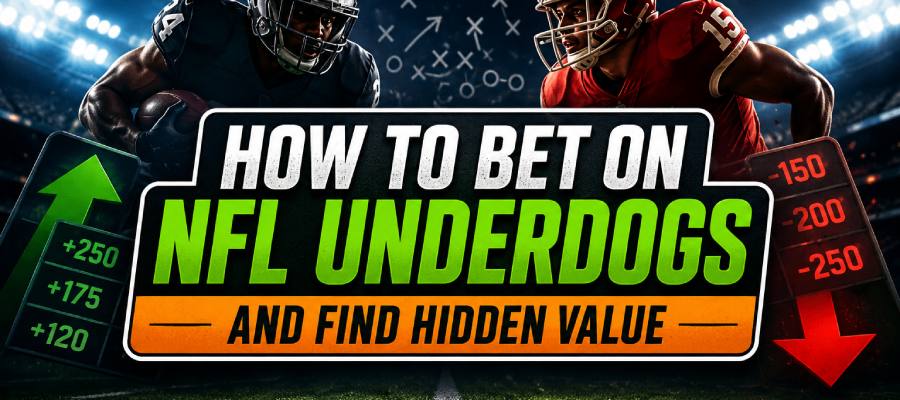
p>Betting on underdogs in the NFL is tempting because even a small upset can lead to a big payout. If you want a stronger handle on NFL betting markets, it helps to study how spreads, matchup dynamics, public perception, and line movement shape underdog pricing over a season.Underdogs become profitable when you spot spots where sportsbooks or public sentiment are overvaluing the favorite. Experienced bettors are usually chasing value, not just trying to call winners. In NFL betting, a team can lose the game outright and still be the right spread bet.
Underdog betting isn’t about blindly backing plus-money teams. It’s about spotting where the market’s expectations have gotten inflated.
Editorial Note
This content explains how NFL underdog betting markets behave and how sportsbooks adjust pricing based on perception, injuries, scheduling spots, and matchup dynamics. It is designed for educational purposes and does not guarantee betting outcomes.
Quick Answer
NFL underdogs can offer betting value when public perception inflates the favorite’s price. Successful bettors typically focus on matchup context, situational spots, line movement, and motivation rather than simply betting every underdog.
How Can You Take Advantage of NFL Underdogs?
Despite the fact that many fans enjoy rooting for underdogs, betting markets still lean heavily toward favorites. This is understandable because favorites are expected to win outright more often, but covering the spread is a completely different conversation.
In simple terms, sportsbooks price probability rather than certainty. A favorite may still win the game outright while failing to cover the spread, which is why underdog betting often becomes a market-value discussion rather than a prediction exercise.
Why Underdog Value Appears
- 🎯 Spread vs winner: The favorite can win outright and still fail to cover.
- 📈 Market movement: Lines can shift when public betting pressure builds.
- 📣 Public perception: Popular teams often attract more attention than value.
- ⚠ Price inflation: A spread can move away from realistic matchup probability.
Bettors still learning how spreads shift throughout the week often benefit from studying both how NFL point spreads work and how to bet NFL point spreads, since understanding market pricing is central to evaluating underdog value.
Since the 2004 NFL season, underdogs have covered the spread at a rate slightly above 50%, which demonstrates how often market expectations become inefficient. This happens because betting markets react to perception, public money, injuries, and media narratives faster than they react to actual game results.
Market Signals to Watch
- 💰 Public money: Heavy favorite action can push the spread higher.
- 🚑 Injury news: Late player updates can change real team strength quickly.
- 📰 Media narratives: Recent wins, losses, and storylines can distort pricing.
- ⚖ Market efficiency: The goal is to find numbers that no longer match the matchup.
When those reactions become exaggerated, spreads can drift away from realistic matchup probability. These same pricing principles also apply when evaluating the opposite side of the market, such as betting on NFL road favorites, where identifying whether a line is inflated or efficient becomes just as important as selecting the right team.
Bettors who want to understand how sportsbooks balance both sides of the market can also study concepts like pro football arbitrage wagering, where pricing differences across sportsbooks create opportunities tied directly to line movement and market efficiency.
Quick Answer
Why do NFL underdogs cover so often? Markets often overprice popular favorites due to public betting volume and perception.
Does an underdog need to win the game? No. Against-the-spread betting only requires the underdog to stay within the point spread.
Key Insight
⚙ Market Inflation:
Popular teams often receive heavier public betting action, which can artificially expand the spread.
Why it matters:
This can create hidden value on underdogs when the actual matchup is more competitive than the line suggests.
Visual Model
| Factor | Meaning |
|---|---|
| Public Betting | Popular favorites attract more money, which can shift lines away from true probability. |
| Situational Spots | Travel, fatigue, bye weeks, and rivalry games can narrow the real performance gap. |
| Market Overreaction | Recent wins or losses can distort how sportsbooks and bettors price teams. |
| Divisional Familiarity | Rivals tend to play closer games because both teams know each other’s systems well. |
| Situation | Why Bettors Watch It | Underdog Advantage |
|---|---|---|
| Divisional Rivalry | Teams know each other extremely well | Games are usually closer than expected |
| Lookahead Spot | Favorite may be focused on next week | Motivation gap narrows |
| Short Week Road Favorite | Travel and preparation become harder | Fatigue increases volatility |
| Home Underdog | Familiar environment and crowd energy | Comfort can stabilize performance |
| Public Favorite Hype | Popular teams attract heavy betting volume | Spread may become inflated |
Underdog Implied Probability Calculator
Convert betting odds into implied win probability to better understand market expectations.
NFL Spread Risk Calculator
Estimate how much cushion an underdog has against the spread.
If you're wondering why this matters, it's because sportsbooks are pricing expectations, not certainties. When perception becomes exaggerated, underdogs can quietly become the sharper side of the market.
What Should You Look for When Betting NFL Underdogs?
A major reason for the success underdogs have had over the past two decades is the overall parity within the NFL. Salary cap rules and free agency prevent teams from maintaining dominant rosters indefinitely, which creates smaller talent gaps across the league.
Due to this parity, teams regularly make dramatic year-to-year improvements. The 2000 Baltimore Ravens won the Super Bowl after finishing 8-8 the previous season. The 1999 St. Louis Rams improved from 4-12 to champions in a single year, while the 2001 New England Patriots went from 5-11 to winning the Super Bowl.
In simple terms, NFL standings from the previous season do not always accurately reflect current team strength. Markets sometimes react too heavily to historical narratives rather than present matchup conditions.
Quick Answer
Why does parity matter in NFL betting? Smaller talent gaps increase the likelihood of competitive games and unexpected results.
Do bad teams always stay bad? No. NFL roster turnover and coaching changes can rapidly reshape team performance.
Key Insight
♻ Parity:
The NFL salary cap structure naturally compresses talent differences between teams.
Why it matters:
Smaller performance gaps increase the value of spreads, especially for home underdogs.
NFL Underdog Evaluation Flow
🔍 Step 1
Check injuries, quarterback status, and offensive line health.
📊 Step 2
Review line movement and identify possible public inflation.
🏫 Step 3
Evaluate home field, travel fatigue, and scheduling spots.
🎲 Step 4
Decide whether the spread reflects true probability or market perception.
Should You Always Bet on NFL Underdogs?
No. The fact that underdogs have historically covered spreads at profitable rates does not mean bettors should blindly back every underdog on the board.
When evaluating betting lines, bettors still need to analyze matchup quality, injuries, coaching trends, situational angles, and line value. If you want a more structured framework, this guide on how to bet on NFL point spreads explains how bettors translate market numbers into more disciplined wagering decisions.
Before Backing an Underdog, Check This
- ✅ Matchup quality: Does the underdog have a realistic path to keep the game close?
- 🚑 Injuries: Are key starters, quarterbacks, linemen, or defensive playmakers missing?
- 📈 Line value: Has the spread moved too far because of public betting pressure?
- ⏱ Situational spot: Is the favorite dealing with travel, short rest, a lookahead game, or emotional letdown?
For bettors looking to deepen their market analysis, studying additional NFL point spread handicapping strategies and betting concepts helps explain how sportsbooks price underdogs, favorites, and situational value throughout the season.
That same disciplined approach also applies to player-based wagering, which is why understanding when NFL player props offer real betting value can sometimes reveal better opportunities than traditional side betting.
Bettors interested in a more specific scoring market can also learn how NFL anytime touchdown scorer bets use player roles, red-zone opportunities, projected game script, and betting odds to determine potential value.
Many bettors also compare matchup-based underdog analysis with broader NFL prop betting markets, especially when quarterback performance, rushing volume, or game script expectations may influence both sides and props simultaneously.
When Underdogs Become More Interesting
- 🏡 Home field: The team may be weaker overall, but home-field comfort can help keep the game competitive.
- 🔄 Recent form: A team playing better than its record suggests may be undervalued by the market.
- 🔥 Motivation: Rivalry games, spoiler spots, and rebound situations can tighten the performance gap.
- 🎲 Market discipline: The goal is not to chase every underdog, but to find numbers that still carry value.
How Experienced Bettors Evaluate NFL Underdogs
If a team is a home underdog, they are usually viewed as weaker by the market, but that does not automatically mean they cannot cover the spread.
The key question is not whether the underdog is better overall, but whether the spread accurately reflects the true gap between both teams.
Key Factors to Evaluate
- 📈 Recent form: Is the team playing better than its overall record suggests?
- 📅 Scheduling spot: Travel, short rest, and lookahead games can influence performance.
- 🚑 Injuries: Missing starters can dramatically shift real team strength.
- 🏆 Motivation: Rivalry games and spoiler situations often increase competitiveness.
- 🎯 Matchup style: Certain schemes naturally create tighter games against stronger opponents.
The same evaluation process applies to scoring-based markets like totals betting, where team tempo, injuries, weather, and game script expectations directly influence projected scoring. Bettors can narrow that analysis to one offense by learning how to bet NFL team totals, especially when an underdog has a favorable scoring matchup but may not be the strongest side against the spread.
From a betting perspective, experienced bettors usually avoid emotional betting and instead focus on situations where the market may be overreacting to recent performances, media narratives, or public betting trends.
That same market-overreaction concept is often visible in player betting markets as well, particularly in situations covered in reports like this NFL running back prop analysis and this quarterback prop betting breakdown, where public narratives can sometimes distort realistic expectations.
It’s important to note: even well-identified underdog spots can still lose due to turnovers, injuries, officiating variance, or late-game volatility.
What Is an Example of a Classic NFL Underdog Spot?
During one NFL season, the Las Vegas Raiders opened 0-10 and were widely viewed as one of the league’s weakest teams. In Week 12, they faced the Kansas City Chiefs, who entered the matchup at 7-3 after defeating the defending Super Bowl champion Seattle Seahawks.
Why the Matchup Looked Dangerous for Kansas City
To the public, the game appeared heavily tilted toward Kansas City. However, experienced bettors identified several warning signs before kickoff.
Trap Game Warning Signs
- 🔥 Emotional victory: Kansas City was coming off a major win against Seattle.
- 📅 Lookahead spot: A critical divisional matchup against Denver was approaching.
- 📈 Public betting pressure: Most bettors heavily backed the Chiefs.
- 🏡 Divisional familiarity: Rival teams often play closer games than expected.
- ⚠ Desperate underdog: Winless teams can become dangerous when playing at home.
This created what bettors often describe as a “trap game” — a situation where the favorite may be overlooking the opponent.
A trap game occurs when market confidence in the favorite becomes stronger than the actual matchup conditions.
This type of public overconfidence is one reason why bettors continue studying how NFL spreads move against sportsbook expectations, especially in heavily bet primetime matchups.
While the betting public heavily backed Kansas City, the sharper side of the market recognized that Las Vegas had situational value as a divisional underdog playing at home.
What Happened After Kickoff?
As the game unfolded, the Raiders not only covered the spread but won outright. This is commonly observed in divisional matchups because rivals tend to play more competitive games than public perception suggests.
Warning Signs of a Trap Game
- ⚠ Emotional win: Favorite is coming off a major televised victory.
- 📅 Lookahead opponent: Bigger divisional matchup is scheduled next week.
- 📈 Heavy public betting: Majority of tickets are stacked on one side.
- 🏡 Divisional familiarity: Rival teams usually understand each other's tendencies.
- 🔥 Desperate underdog: Losing teams often play more aggressively at home.
Quick Answer
What is a trap game? A matchup where the favorite may be distracted, overvalued, or emotionally flat after a major win.
Why do divisional underdogs matter? Familiarity between rivals often reduces the true performance gap.
Why Do Home NFL Underdogs Sometimes Perform Better?
Another profitable NFL underdog situation involves teams playing consecutive home games. Home underdogs matter because travel fatigue, routine stability, and crowd influence can reduce the practical gap between teams.
Home teams avoid many of the physical and logistical challenges associated with travel, including fatigue, disrupted preparation, and reduced recovery time.
An underdog playing back-to-back home games after a previous loss is often considered more dangerous because teams generally want to avoid disappointing their home crowd in consecutive weeks.
This is also connected to recovery and scheduling science. Research on athlete recovery and travel fatigue from CompEdge Physical Therapy explains how recovery windows and travel demands can influence athletic performance over time.
Visual Model
Why Home Underdogs Become Dangerous
NFL Underdog Betting Explained
NFL underdog betting focuses on identifying spreads where sportsbook pricing may overvalue the favorite. Bettors typically evaluate line movement, injuries, scheduling spots, motivation, and public betting behavior before deciding whether the underdog carries betting value.
FAQ
Do NFL underdogs win outright often?
Some do, but against-the-spread betting only requires the underdog to stay within the line.
Are home underdogs usually profitable?
Home underdogs can become valuable when scheduling, motivation, and market inflation align properly.
Why do public bettors prefer favorites?
Most bettors naturally prefer teams expected to win, which can inflate favorite pricing.
Should you fade every popular favorite?
No. Market inflation creates opportunities selectively, not automatically in every game.
Summary
- NFL underdogs become valuable when public perception inflates favorite pricing.
- Divisional games and scheduling spots often create stronger underdog opportunities.
- Successful bettors focus on market value rather than simply picking winners.
- Travel fatigue, motivation, and line movement all influence underdog performance.
- Discipline and matchup analysis matter more than blindly betting every underdog.
| Betting Style | Primary Goal | Main Risk |
|---|---|---|
| Favorite Betting | Back stronger team performance | Inflated spread pricing |
| Underdog Betting | Find market inefficiencies | High game volatility |
Learn How NFL Betting Lines Really Move
Understanding line movement, market psychology, and sportsbook pricing helps bettors recognize where value develops throughout the week. Continue with this guide on NFL point spreads and betting line movement.
Read the GuideFinal Thoughts
Successful NFL underdog betting is rarely about predicting massive upsets. More often, it involves recognizing when sportsbooks and the betting public have pushed a line beyond what the matchup realistically supports.
Key Takeaways for NFL Underdog Bettors
- 🎯 Focus on value: The objective is to identify inefficient spreads, not simply pick winners.
- 📈 Monitor market movement: Public betting pressure can inflate favorite pricing.
- 🏆 Trust matchup analysis: Divisional familiarity, injuries, and scheduling spots often matter more than team records.
- ⏱ Be patient: Timing can significantly impact the number you receive.
Why Timing Matters
Markets frequently overreact to winning streaks, media narratives, and public perception. Bettors who remain disciplined and wait for favorable pricing often gain a long-term advantage over those chasing popular teams.
The importance of timing extends beyond weekly betting opportunities. Futures markets can also reward patience, particularly when bettors understand when to bet NFL futures and how timing affects market value, allowing them to secure stronger prices before sportsbooks adjust the odds.
| Principle | Why It Matters |
|---|---|
| Value Over Winners | Profitable betting focuses on price and probability rather than predicting every game correctly. |
| Market Discipline | Avoiding emotional reactions helps bettors identify inflated lines. |
| Proper Timing | Line movement can create better entry points throughout the week. |
| Situational Analysis | Travel, fatigue, injuries, and motivation frequently influence outcomes. |
Important Reminder
⚠ Sports betting involves risk. The long-term goal of NFL underdog betting is not to predict every upset correctly but to consistently identify situations where market expectations become inefficient.
No strategy guarantees results, and sound bankroll management remains essential regardless of historical trends, market analysis, or perceived betting value.
MyBookie: Bet On Anything. Anywhere. Anytime.

About the Author

Henry Watkins is a Sports Writer at MyBookie. Originally from Scotland and currently residing in Metro Atlanta with his wife, Penny, Henry covers competitive and professional sports as well as the business of sports. In addition to his sports writing, he is an author of horror fiction, including Karaoke Night, Crueller, and Off The Grid.
Sportsbook Bonuses