English


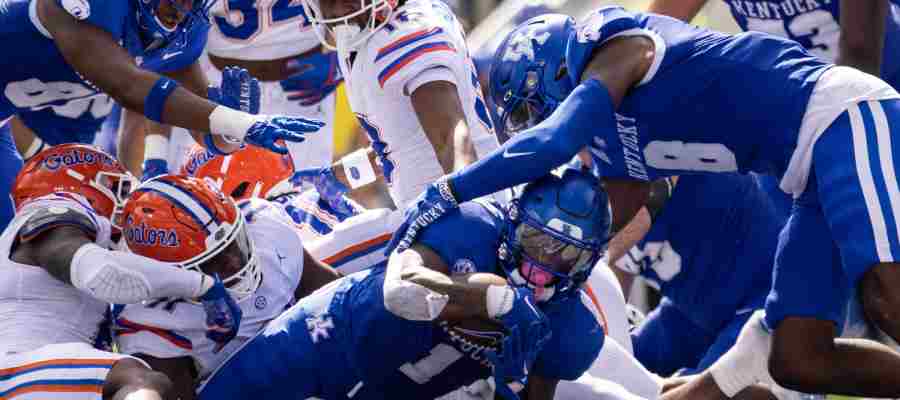
There are few things exciting to bettors as college football Saturday’s, as the number of games on offer is astonishing. The problem here, though, is that if you don’t know how to bet on college football, you can blow through your bankroll quickly. The key to Saturday success, in our opinion, is to adopt a point spread college football strategy, so let’s get into that now.
Quick Answer: What are College Football Spreads?
A college football point spread is the margin that sportsbooks expect a game to be decided by. Favorites must win by more than the posted spread to cover, while underdogs can either win outright or lose by fewer points than the spread.
Table of Contents
- Tired of Saturdays Ruining Your Bankroll? The Spread is Your Solution!
- What in the World is a College Football Point Spread?
- Your First Winning Play: Simple Strategies for Covering the Spread
- Spotting the Red Flags: Common College Football Betting Mistakes
- Beyond the Game: Other Bets You’ll Soon Master
- Final Thoughts on Mastering College Football Spreads: Your Winning Saturdays Start Now!
Tired of Saturdays Ruining Your Bankroll? The Spread is Your Solution!
If you are tired of losing on Saturday’s, turning your attention to our CFB point spread betting tips might be the way to break out of that funk. We are going to look at the games to wager on, the pitfalls to avoid, and how to pick out games that offer a solid winning proposition.
What in the World is a College Football Point Spread?
How Does a College Football Point Spread Work?
What is a point spread?
Simply put, it is the number that the bookies believe a game will be decided by. The team that starts as the favorite will have a – beside the spread number, while the underdog will have a +. Think of it like a goal score, where the favorite must overcome the handicap and the underdog gets the points added to its side.
Reading college football lines is easier once you understand the basics, and beginners can get up to speed quickly with this guide on how to read college football odds. Before diving into individual matchups, it can also help to understand how the season gets started. Our College Football Week 0 betting guide covers the early-season odds, best bets, and key matchups to watch before the full Saturday schedule arrives. For beginners looking to build a stronger foundation, the Sports Betting Academy offers additional guides on betting terminology, markets, and strategy basics.
College Football Point Spread Example
For example, let’s say we have a game with Georgia -13 vs. Kentucky +13. The line is telling you that Georgia must win by more than 13 points to cover the spread. If Kentucky wins outright or loses by fewer than 13 points, the underdog covers.
Your First Winning Play: Simple Strategies for Covering the Spread
The Golden Rule: It’s Not Just About Winning, It’s About Covering. Picking winners can be easy when backing top college football teams, but short prices offer limited value, and one upset can erase several previous wins. Point spreads shift the focus from who wins to whether a team can beat the posted number.
Timing can also play a role in how bettors approach college football spreads. Understanding college football look-ahead lines can help explain how early numbers are posted, why spreads move, and what information can influence the market before kickoff.
Evaluate the Team Behind the Record
A strong win-loss record does not always reveal the quality of a team. Understanding how to use strength of schedule in college football betting can expose teams whose records were built against weaker opponents and uncover potential value against the spread.
Coaching turnover also matters because a new staff can change offensive schemes, defensive assignments, tempo, and in-game decision-making. Learn how college football coaching changes create betting value before relying too heavily on last season’s results.
Three Factors to Check Before Betting
- ⚖ Matchup: Compare offensive strengths with defensive weaknesses instead of judging teams only by their records.
- 📈 Recent ATS Form: Check whether a team has consistently covered the spread, not simply whether it has won games.
- 🛡 Underdog Value: Defensive underdogs and teams that perform well against stronger opponents can stay inside the number.
Quick Spread-Betting Checklist
| Factor | What to Examine | Possible Betting Signal |
|---|---|---|
| Schedule | Quality of previous opponents | An inflated or underrated record |
| Coaching | Scheme, tempo, and staff changes | Performance that may differ from last season |
| Matchup | Offense versus opposing defense | A specific advantage against the spread |
| ATS Form | Recent covering results | Market expectations exceeding actual performance |
Spotting the Red Flags: Common College Football Betting Mistakes
Ignoring Key Information
Injury reports, coaching changes, roster updates, and even weather conditions can influence how a team performs against the spread. It is also important to understand the sports betting rules that apply to different wagers before placing a bet.
Chasing Highs and Lows
Emotions can lead to poor decisions when betting on college football. Backing your favorite team every week or reacting to a big win or loss can cause you to overlook important factors like matchup strength, pricing, and current form.
Following the Crowd
Popular teams often attract heavy public attention, but betting decisions should be based on your own analysis rather than simply following where most bettors are placing their money. Understanding why lines move and how markets react can help provide better context before making a wager.
Beyond the Game: Other Bets You’ll Soon Master
The same matchup analysis used for point spreads can help you evaluate several other college football betting markets.
College Football Markets to Explore
- ↕ Over/Under Bets: Predict whether the combined score will finish above or below the posted total.
- 📈 Futures: Bet on season-long outcomes such as conference champions or playoff qualification.
- 🏆 Bowl Games: Analyze motivation, coaching changes, opt-outs, and neutral-site matchups.
- 🎯 Player Props: Focus on an individual player’s passing, rushing, receiving, or scoring performance.
How Your Spread Skills Transfer
| Market | Key Factor |
|---|---|
| Team Totals | One team’s offense versus the opposing defense |
| Game Totals | Pace, scoring efficiency, and projected game script |
| Futures | Schedule strength, roster depth, and long-term value |
| Player Props | Usage, matchup, and expected opportunities |
If you want to apply your matchup analysis to one side of the scoreboard, this guide to college football team totals explains how to determine whether a specific team could finish over or under its posted number.
These same principles can also improve your college football bowl game betting when the postseason begins.
Final Thoughts on Mastering College Football Spreads: Your Winning Saturdays Start Now!
Profitable college football bets are now within your reach, so be sure to check out the latest point spread odds on the MyBookie college football betting page. No more losing Saturdays! You’ve just unlocked the secrets to mastering college football spreads. It’s time to put your new knowledge into action and start winning. Head over to MyBookie College Football right now, check the latest spreads, and make your winning pick!
MyBookie: Bet On Anything. Anywhere. Anytime.
Important: Sports betting involves risk. No strategy guarantees results, and managing exposure is essential.

About the Author

Henry Watkins is a Sports Writer at MyBookie. Originally from Scotland and currently residing in Metro Atlanta with his wife, Penny, Henry covers competitive and professional sports as well as the business of sports. In addition to his sports writing, he is an author of horror fiction, including Karaoke Night, Crueller, and Off The Grid.
Sportsbook Bonuses
Read requirements in the Bonus page. However, if you want to take a deep knowledge, go to MyBookie Bonus Rules and How to


🔍 Explore Everything you Need to Know aboout your Licensed, Trusted Home For Casino and Sports Since 2014
👉 Gamble responsibly—must be 21+ and in a Legal Jurisdiction | Get Help at 1-800-Gambler