English


Last updated: May 2026
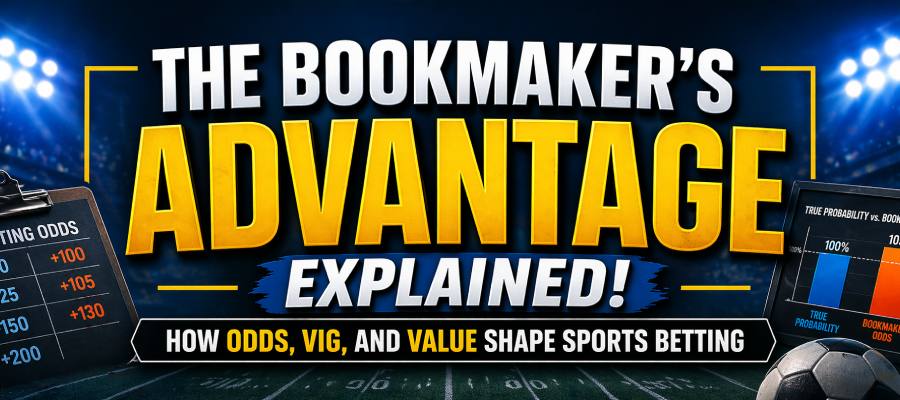
Success in sports betting, even for the best of the best gamblers, is hard to sustain over a long duration. This is because of several reasons, one of which does that bookmakers often use certain strategies to ensure that they always have some sort of advantage over you. If your goal is to stay profitable, it’s important to follow proven tips to reduce risk in sports betting before trying to beat the market consistently.
The real edge is not simply picking winners. It comes from understanding how odds are built, where bookmaker margin lives inside the market, and how to separate a smart wager from a bad price. If you’re new to the terminology behind betting markets, reviewing key sports betting terms can help you recognize concepts like vig, margin, and overround faster.
Quick Answer: Bookmaker’s Advantage Explained
The bookmaker’s advantage comes from the built-in margin added to betting odds, often called vig, juice, or overround. Bettors improve their chances long term by understanding implied probability, comparing prices, and focusing on value instead of simply picking winners.
What Is the Bookmaker’s Advantage in Sports Betting?
The most elementary price behind bookmaking is that bookies adjust the odds of any given event such that they take more money from the bettors than what they eventually pay out.
Obviously, bookies cannot control the outcomes of sports betting events, but they can sure control how much they stand to lose or win on any given result.
- 💰 Sportsbooks build margin directly into betting odds
- 📊 Markets are priced to reduce bookmaker risk exposure
- ⚖ The goal is long-term profitability, not winning every single event
- 📈 Odds movement helps balance action across both sides of a market
This is where the art of bookmaking comes in, as the bookmakers set the odds for all the wagers they lay, which in turn allows them to ultimately make profits. To fully understand how these pricing models work, it helps to explore how sportsbooks operate behind the scenes.
The basic technique used by bookmakers to tailor odds in their favor is by including a vigorish, also known as margin, juice, or the overround.
- 💸 Vig represents the hidden commission attached to wagers
- 🔍 Overround pushes total implied probability above 100%
- 📝 Juice increases the cost bettors pay to enter a market
- ⏳ Small margins compound into large long-term sportsbook profits
This vig is built into the odds such that a commission is charged for laying bets, so irrespective of an event’s outcome; profits are guaranteed for the bookies.
The Bookmakers don’t always win money on every single market or event they price up, but this mathematical advantage ensures that the bookies win money in the long run.
Key Insight
∑ Built-In Margin:
The bookmaker’s advantage comes from pricing markets so the total implied probability goes above 100%, creating room for profit over time.
💰 Why it matters:
Even when odds look fair on the surface, the vig means bettors are often paying a hidden cost for every wager they place.
Visual Model

| Element | Meaning |
|---|---|
| Vigorish | The commission built into the odds that helps the bookmaker earn over time. |
| Margin | The percentage edge the bookmaker adds between true probability and offered price. |
| Juice | A common betting term for the extra cost attached to a wager. |
| Overround | The total implied probability of a market exceeding 100%. |
How Do Sportsbooks Use Line Movement to Protect Their Advantage?
Sportsbooks do not move betting lines solely because they believe the probability of an outcome has changed. In many cases, odds adjustments are part of a broader risk-management process designed to balance action, control liability, and protect the bookmaker’s margin.
📊 Why Sportsbooks Move Betting Lines
Those adjustments begin with the sportsbook’s original pricing process. Before odds ever move because of betting action, injuries, or market sentiment, bookmakers establish an opening number using statistical models, probability estimates, and risk management principles. Understanding how sportsbooks set betting lines provides useful context for why markets open where they do and how they evolve before reaching their closing price.
| Factor | Why It Matters |
|---|---|
| 💰 Betting Volume | Heavy action on one side can increase sportsbook liability. |
| ⏳ Sharp Money | Professional bettors often influence early market movement. |
| 🚨 Injury News | Player availability can change expected outcomes quickly. |
| 🔥 Public Sentiment | Popular teams often attract recreational betting pressure. |
⚖ How Risk Management Works
When sportsbooks receive a disproportionate amount of money on one side of a market, they may adjust the odds or point spread to encourage betting activity on the opposite side.
- 📈 Heavy betting volume can trigger immediate odds movement.
- 💲 Price adjustments help reduce one-sided exposure.
- ⏰ Early markets often react when sharp bettors enter.
- 🔍 Public betting trends can inflate favorites and popular teams.
💡 What Bettors Should Watch For
Not all line movement means the same thing. Some moves are driven by new information, while others are simply a sportsbook managing risk.
Common Causes of Odds Movement
- ✅ Sharp money entering the market
- ✅ Injury reports and lineup changes
- ✅ Public betting narratives
- ✅ Liability management by bookmakers
Recognizing the difference can help bettors better interpret market behavior and identify potential value opportunities. This is one reason experienced bettors closely track sportsbook odds movement before placing wagers.
How Do You Beat the Bookmaker’s Advantage in Sports Betting?
Beating the bookmaker’s advantage starts with understanding how odds are priced and where value exists within the market. Long-term success is less about picking winners and more about identifying situations where the odds underestimate the true probability of an outcome.
For bettors building those fundamentals from the ground up, these lessons on how to start sports betting provide a practical foundation before moving into more advanced probability and value analysis.
📊 Focus on Value, Not Predictions
Many bettors concentrate on predicting what will happen. Successful bettors spend more time evaluating whether the price offered is worth the risk.
- 📈 Compare implied probability to real-world outcome likelihood
- 🔍 Identify where bookmaker margin is built into the odds
- 🧠 Avoid emotional decisions and cognitive biases
- 🎯 Focus on value instead of simply picking winners
This process becomes much easier once you understand probability in sports betting and how sportsbooks translate probability into pricing.
⚙ Common Mistakes That Strengthen the Bookmaker’s Edge
| Mistake | Impact |
|---|---|
| Betting emotionally | Leads to poor value decisions |
| Ignoring implied probability | Makes overpriced bets harder to spot |
| Following public narratives | Often means paying inflated prices |
| Chasing losses | Increases bankroll volatility |
One common example is the gambler’s fallacy in sports betting, where bettors incorrectly assume past results influence future outcomes when no meaningful predictive relationship exists.
💰 Habits That Can Improve Long-Term Results
Successful betting is usually built on process and discipline rather than intuition alone.
Practical Betting Habits
- ✅ Compare odds across sportsbooks before betting
- 💰 Pass on overpriced or low-value markets
- ⏳ Follow a repeatable betting workflow
- 📚 Use structured sports wagering strategy research to improve decisions
Bettors looking to build stronger fundamentals can also review practical methods to improve your sports betting income today, including bankroll management, betting discipline, and opportunity evaluation.
💡 The Real Goal
Beating the bookmaker’s edge is not about winning every wager. It is about consistently finding situations where the market price is weaker than the true likelihood of the outcome.
Understanding concepts such as implied probability in online wagering helps bettors evaluate those opportunities more effectively and make better long-term decisions.
Before relying on outside advice, bettors should also evaluate whether it genuinely improves their edge. That is why many experienced bettors review whether paying for sports picks is worth it before following third-party selections.
How Value Betting Works
🔍 Identify the true price:
Estimate what the odds should be before you look at the sportsbook line, then compare your number to the bookmaker’s number.
📈 Compare market to probability:
If the market is paying better than the true chance of the outcome, you may have found betting value.
⚖ Avoid emotional bets:
Backing a favorite team or a popular narrative does not create value unless the price itself is actually favorable.
| Element | Meaning |
|---|---|
| Good Bet | A wager placed at odds that offer better value than the true probability of the outcome. |
| Bad Bet | A wager placed because the pick feels right, even though the price is inflated by margin or public bias. |
| Consistent Process | Tracking lines, comparing sportsbooks, and waiting for strong price points instead of forcing action. |
What Sharp Bettors Usually Look For
- ✅ Lines that differ from their own projected probability
- 📊 Odds that moved too aggressively because of public betting
- 🔍 Markets where bookmaker margin appears inflated
- ⏰ Timing advantages before sportsbooks fully adjust pricing
Implied Probability Calculator
Enter American odds to estimate the implied probability behind the price. This helps you see how much probability is baked into a line before you decide whether there is value.
Learn how to reduce betting risk before chasing value
If you want to improve your decision-making, start by tightening bankroll habits and avoiding unnecessary exposure with these sports betting risk reduction tips.
Read the GuideFAQ
What is the bookmaker’s advantage in sports betting?
The bookmaker’s advantage is the built-in edge created by pricing odds with margin, also called vig, juice, or overround. It allows sportsbooks to stay profitable over the long run.
Can bettors beat bookmaker margin?
Yes, but not by guessing winners alone. Bettors improve their chances by identifying value, comparing prices, understanding implied probability, and avoiding poor numbers.
Is a winning pick always a good bet?
No. A winning bet can still be a bad bet if the odds were poor. Likewise, a losing wager can still be a good bet if the price offered long-term value.
Why is vig important to understand?
Vig is the hidden cost inside betting odds. If you cannot spot it, you may overestimate your edge and place wagers that look appealing but are mathematically weak.
Summary
- The bookmaker’s advantage comes from margin built into the odds, not from controlling game outcomes.
- Understanding vig, overround, and implied probability helps bettors judge whether a line offers real value.
- Long-term betting improvement comes from price discipline, not just picking winners.
Final Thoughts
Understanding the bookmaker’s advantage is one of the most important steps toward becoming a more informed and disciplined bettor. Sportsbooks are not trying to predict every game perfectly—they are trying to manage risk and price markets profitably over the long run.
📊 What Successful Bettors Focus On
| Casual Approach | Long-Term Approach |
|---|---|
| Picking winners | Finding value |
| Following opinions | Analyzing prices |
| Reacting emotionally | Following a process |
| Short-term results | Long-term expectation |
Many professional bettors spend less time trying to predict every outcome and more time identifying small pricing inefficiencies across a large sample of wagers.
💰 Small Edges Add Up
- ✅ Better prices improve long-term profitability
- 📈 Consistent value beats occasional big wins
- ⏳ Patience helps avoid forced wagers
- 🔍 Line value compounds over hundreds of bets
Even a small advantage over the market can become meaningful when applied consistently over time.
🧠 Sports Knowledge Alone Is Not Enough
Long-term betting success requires a structured approach that combines pricing analysis, discipline, bankroll management, and decision-making. This philosophy closely aligns with the art of sports betting, where process often matters more than prediction.
Key Takeaway
- 🎯 Be selective with your wagers
- 📊 Focus on price rather than outcomes
- 💰 Manage risk consistently
- ✅ Make better decisions more often
Ultimately, beating the bookmaker’s advantage is about making smarter decisions on a consistent basis. The more price-aware, disciplined, and risk-conscious you become, the better positioned you are to identify worthwhile betting opportunities over the long run.
MyBookie: Bet On Anything. Anywhere. Anytime.
Important: Sports betting involves risk. No strategy guarantees results, and managing exposure is essential.

About the Author

Henry Watkins is a Sports Writer at MyBookie. Originally from Scotland and currently residing in Metro Atlanta with his wife, Penny, Henry covers competitive and professional sports as well as the business of sports. In addition to his sports writing, he is an author of horror fiction, including Karaoke Night, Crueller, and Off The Grid.
Sportsbook Bonuses
Read requirements in the Bonus page. However, if you want to take a deep knowledge, go to MyBookie Bonus Rules and How to


🔍 Explore Everything you Need to Know aboout your Licensed, Trusted Home For Casino and Sports Since 2014
👉 Gamble responsibly—must be 21+ and in a Legal Jurisdiction | Get Help at 1-800-Gambler