English
Last updated: August 2026
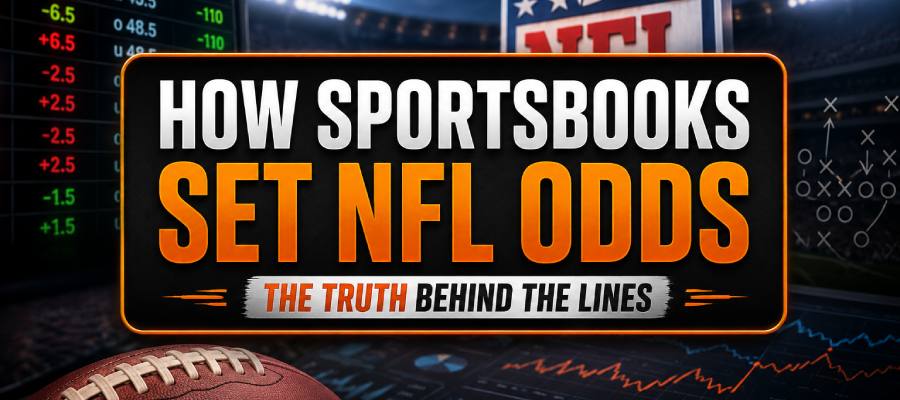
NFL odds come out of a structured pricing process built around power ratings, probability models, matchup analysis, sportsbook risk management, and ongoing market feedback. Every number a sportsbook posts is the current price of a game, not a prediction of its outcome.
Definition: A power rating is an internal numerical score estimating the relative strength of each NFL team, before adjusting for matchup-specific factors.
Knowing how sportsbooks set NFL odds helps bettors read line movement, understand why prices change, and see what role information plays before a wager goes down. If you’re new to sports betting, or just refining your NFL strategy, our guide to how sportsbooks work covers the oddsmaking business in more detail, and our NFL Betting Guide covers wagering across the season.
Editorial Note
This guide explains how sportsbooks create and adjust NFL betting odds. It is intended for educational purposes to help bettors understand pricing mechanics, market movement, and sportsbook risk management rather than predict game outcomes.
Quick Answer
Sportsbooks set NFL odds by combining power ratings, probability models, roster evaluations, injuries, scheduling factors, and market activity. Once opening numbers are posted, betting action and new information continually shape the line until kickoff.
In one sentence: Sportsbooks set NFL odds by estimating each team’s probability of winning, assigning a betting price to that probability, and continuously updating the number as new information and betting activity enter the market.
Table of Contents
- Editorial Note
- How Do Sportsbooks Set NFL Odds Before the Season Starts?
- What Factors Cause NFL Betting Odds to Change?
- Why Do Different Sportsbooks Offer Different NFL Lines?
- How Do Sportsbooks Balance Risk Instead of Predicting Winners?
- How Does Sharp Money Influence NFL Odds?
- Can Bettors Use Sportsbook Line Movement to Find Better NFL Bets?
- How Do First Half and Second Half NFL Lines Work?
- Frequently Asked Questions About How Sportsbooks Set NFL Odds
- How Sports Betting Availability Affects NFL Betting in California and Florida
- Final Thoughts
How Do Sportsbooks Set NFL Odds Before the Season Starts?
Sportsbooks begin by assigning every NFL team a power rating. Those internal ratings estimate team strength before any betting takes place and serve as the foundation for every opening line.
📊 What Do Sportsbooks Evaluate?
Before posting a betting line, sportsbooks analyze multiple variables that influence each matchup.
- 👤 Quarterback value and overall roster strength
- 🏆 Coaching quality and historical performance
- 📅 Schedule difficulty, rest, and home-field advantage
- 🏥 Injuries and player availability
- 📈 Team performance data and power ratings
Schedule strength also plays an important role, which is explored further in our guide to schedule analysis and NFL point spread winners.
That is the simple answer to how NFL odds work. A sportsbook is not saying, “This is definitely what will happen.” Instead, it publishes the price that best reflects the matchup based on all available information at that moment.
Quick Answer
Who creates NFL betting lines? Oddsmakers, quantitative models, trading teams, and sportsbook risk managers collectively build the opening number.
Are opening odds predictions? No. Opening odds represent a market price based on probability, not a guaranteed outcome.
💰 How Opening Odds Reach the Market
How NFL Opening Odds Are Built
📊 Power Ratings
Every team receives an internal numerical rating based on overall strength entering the season.
🏆 Roster Evaluation
Quarterback quality, coaching, offensive and defensive talent, and depth all influence the initial number.
📅 Schedule Factors
Rest, travel, home-field advantage, and opponent quality are incorporated into every projected matchup.
💰 Market Review
After the opening line is released, sportsbooks monitor betting activity and adjust prices when necessary.
Definition: An opening line is the first betting price released by a sportsbook before significant market action occurs.
⚠ Why Opening Lines Can Change Quickly
A quarterback injury during training camp can immediately reshape the betting market. Week 1 spreads may move, futures prices can change, season win totals may be adjusted, and even Super Bowl odds can shift before most casual bettors have looked at the board. Because these prices can move quickly, understanding when to lock in a Super Bowl line can help bettors evaluate whether an early number offers value before new information changes the market.
| Event | Potential Market Impact |
|---|---|
| Quarterback injury | Spread, moneyline, totals, and futures may all move. |
| Major roster news | Power ratings and matchup projections are updated. |
| Training camp developments | Season win totals and Week 1 prices may change. |
⚙ Who Actually Sets NFL Betting Lines?
Rarely a single individual. Modern sportsbooks rely on teams of oddsmakers, traders, statistical models, power ratings, and continuous market feedback working together throughout the week.
Opening lines begin with quantitative modeling built from power ratings, historical performance, and statistical analysis. Bettors interested in the analytical side of handicapping can also review using stats, trends, and other statistical tools. Once betting begins, however, the market itself becomes part of the pricing process.
Once those opening prices are published on the NFL Sportsbook, they continue evolving throughout the week as new information and betting activity reshape the market.
The Three Stages of NFL Odds
- Modeling — sportsbooks calculate an opening number using power ratings and probability.
- Market Discovery — sharp bettors, injuries, weather, and betting activity test whether the opening number is accurate.
- Market Efficiency — by kickoff, the line reflects the sportsbook’s latest estimate after incorporating available information.
Key Insight
⚙ The Initial Number
Opening odds are generated from internal ratings and matchup analysis before meaningful betting volume exists.
📈 Continuous Adjustment
Once wagering begins, sportsbooks continually reassess prices using new information and betting activity.
What Has the Biggest Influence Before Week 1?
| Factor | Why It Matters |
|---|---|
| Power Ratings | Provide the baseline value assigned to every team before betting begins. |
| Quarterback | The most impactful individual position when pricing NFL games. |
| Roster Quality | Overall talent and depth influence projected team strength. |
| Coaching | Scheme, preparation, and historical performance affect projections. |
| Schedule | Travel, rest, home-field advantage, and opponent difficulty modify the baseline. |
| Injuries | Personnel availability can significantly alter projected probabilities. |
If you’re wondering why this matters, it’s because sportsbooks are pricing probability—not predicting certainty. Understanding the fundamentals of betting probability makes it much easier to understand why NFL odds constantly evolve as new information reaches the market.
| Stage | What Sportsbooks Evaluate | Why It Matters |
|---|---|---|
| Preseason | Power ratings, roster strength, quarterback value, coaching, schedule, injuries. | Creates the baseline number before betting action begins. |
| Opening Line | Initial point spread, moneyline, total, futures, and props. | Gives the market a first price to accept, reject, or attack. |
| Midweek Adjustment | Injury reports, practice participation, weather, sharp money, and betting volume. | Shows how new information starts changing the price. |
| Game Day | Confirmed lineups, late weather, public money, liability, and final market position. | Shapes the closing line used to measure market efficiency. |
Definition: The closing line is the final betting number available immediately before kickoff after sportsbooks have incorporated available information and betting activity.

What Factors Cause NFL Betting Odds to Change?
NFL betting odds change when new information changes the sportsbook’s assessment of the game. The biggest drivers include injuries, weather, betting activity, travel, rest, coaching news, and late roster decisions.
📈 What Causes NFL Odds to Move?
- 🏥 Injuries: Quarterback and other key player absences can significantly change projected team strength.
- 🌬 Weather: Wind, rain, and severe conditions can alter scoring expectations and game strategy.
- 💰 Sharp betting: Respected wagers can cause sportsbooks to adjust prices as the market responds.
- 📊 Public money: One-sided betting activity can influence prices, particularly closer to kickoff.
- 📅 Roster and coaching news: Late personnel or coaching developments can reshape the market.
- ✈ Travel and rest: Scheduling factors can affect projected performance and sportsbook pricing.
The number you see on Monday is simply the market’s current opinion. As information becomes available throughout the week, sportsbooks continually update that price to reflect changing probabilities and betting exposure.
▶ How NFL Odds Change After Kickoff
Once the game begins, the same pricing process continues in real time. The score, clock, field position, injuries, and game conditions can all cause sportsbooks to reprice the market.
| In-Game Factor | Potential Effect on Odds |
|---|---|
| ⏰ Game Clock | Changes the amount of time remaining for teams to score or come back. |
| 🎯 Score | Alters win probabilities, spreads, and live totals. |
| 📍 Field Position | Can quickly change expected scoring opportunities. |
| 🏥 Injuries | Can force sportsbooks to immediately reassess team strength. |
| 🌬 Game Conditions | Changing weather or playing conditions can affect live scoring expectations. |
Bettors looking to understand how these factors affect odds after kickoff can explore our NFL Live Betting Guide for a closer look at how in-game markets are priced and adjusted.
💰 How Player Markets React to New Information
These adjustments also extend to player prop markets. Injury reports, changing roles, and projected scoring opportunities can quickly affect the price of individual player markets.
Our guide to NFL anytime touchdown scorer bets explains how sportsbooks turn a player’s expected scoring opportunity into betting odds.
🏆 Why Postseason Odds Can Move Quickly
These variables can become even more important in the postseason. Elimination pressure, shorter preparation windows, and concentrated betting activity can accelerate market adjustments.
Our guide to how to bet on NFL playoffs explains how those conditions shape wagering across each round.
Quick Answer
Why do NFL lines move? Sportsbooks react to new information and betting activity by adjusting prices as probabilities change.
Do odds only move because of injuries? No. Weather, sharp bettors, roster news, betting volume, coaching developments, and risk management also influence NFL betting lines.
How Information Changes NFL Odds
🏥 Injury Reports
Player availability immediately affects projected team strength, especially at quarterback and along the offensive line.
🌬 Weather
Wind, heavy rain, and severe conditions frequently influence totals and occasionally point spreads.
💰 Betting Action
Large wagers or one-sided action may cause sportsbooks to adjust prices while managing exposure.
📰 Breaking News
Coaching decisions, roster transactions, suspensions, and late developments can all reshape the betting market.
A starting quarterback ruled out on Sunday morning can move a spread by several points. Likewise, a significant wind forecast may lower the total before kickoff, while the loss of a starting left tackle may generate meaningful line movement even if it receives little attention from casual bettors. Learning about the wagering impact of injured players helps explain why sportsbooks react so quickly to personnel changes.
These are some of the NFL’s most important betting factors. Our NFL Critical Betting Factors Complete Guide explores these variables in greater detail. Weather deserves particular attention because strong wind and adverse conditions often reshape scoring expectations, as explained in whether the weather is a factor in NFL betting. Sportsbooks understand that no opening number remains perfect forever, so the market continuously evolves as fresh information reaches bettors and trading teams.
Typical Drivers of NFL Line Movement
Definition: Sharp money refers to wagers placed by respected professional bettors whose betting history has demonstrated long-term success.
| Market Trigger | Impact on the Line |
|---|---|
| Quarterback Injury | Can significantly change spreads, totals, and futures markets. |
| Weather Forecast | Most commonly affects game totals and scoring expectations. |
| Sharp Betting | May move opening numbers early in the week. |
| Public Money | Often creates adjustments closer to game day. |
| Coaching or Roster News | Changes team expectations before kickoff. |
| Sportsbook Liability | Books sometimes adjust pricing to better manage risk. |
Definition: Sportsbook liability is the potential financial exposure a sportsbook faces if one betting outcome attracts significantly more money than the opposite side.
That is why NFL lines move. Betting odds are live prices that react to news, sportsbook liability, market activity, betting volume, and public sentiment rather than remaining fixed throughout the week.
If you want a practical framework for evaluating games before the market moves, review these 10 factors to consider before betting NFL lines.
NFL Line Movement Trigger Map
🏥 Injury Trigger
Quarterback, offensive line, defensive secondary, and skill-position injuries can force sportsbooks to reprice team strength quickly.
🌬 Weather Trigger
Wind and severe conditions usually matter most for totals because they can change passing efficiency, kicking range, and scoring pace.
📈 Market Trigger
Sharp money, public money, and betting volume can move lines even when no major roster news appears.
⚖ Risk Trigger
Sportsbooks may move the spread or adjust juice when one-sided exposure becomes too large.
Why Do Different Sportsbooks Offer Different NFL Lines?
Different sportsbooks frequently post different NFL lines because every operator manages its own betting exposure. One sportsbook may need action on the underdog, while another may already have significant liability on the favorite.
As a result, one sportsbook may list a team at -3 while another posts -2.5. The matchup has not changed—the sportsbook’s position in the market has. The same pricing principles also apply to moneyline markets, which are explained in our guide to how moneyline betting works in the NFL.
Key Insight
💵 Independent Risk
Every sportsbook manages its own customers, betting volume, and financial exposure.
📈 Better Prices Matter
Finding a better point spread can significantly improve long-term betting results, especially around key NFL numbers.
This is why line shopping matters. Line shopping is the practice of comparing odds across multiple sportsbooks before placing the same wager in order to obtain the best available price.
Key numbers such as 3 and 7 appear frequently in NFL scoring. Understanding what point spreads mean in football, how NFL point spreads work, and applying practical spread wagering tips helps explain why getting -2.5 instead of -3—or +3.5 instead of +3—can make a meaningful difference over the course of a season.
| Situation | Reason |
|---|---|
| Different Spread | Each sportsbook has different betting exposure. |
| Different Juice | Books may adjust pricing instead of moving the spread. |
| Market Timing | Some sportsbooks react faster to information than others. |
| Risk Strategy | Every sportsbook manages liability independently. |
| Line Choice | Market Meaning | Bettor Takeaway |
|---|---|---|
| Favorite -2.5 | The favorite can win by a field goal and still cover. | More valuable than laying -3 because 3 is a common NFL margin. |
| Favorite -3 | A three-point win pushes instead of wins. | The number is less flexible than -2.5. |
| Underdog +3 | A three-point loss pushes instead of wins. | Useful, but not as strong as getting above the key number. |
| Underdog +3.5 | A three-point loss still wins the bet. | That extra half-point can materially improve the price. |
From a betting perspective, experienced bettors often spend as much time comparing prices as they do handicapping the game itself. Over hundreds of wagers, consistently obtaining better numbers can have a meaningful impact on long-term performance.
If you’re wondering why this matters, it’s because the price is part of every bet. Picking the right team while accepting the wrong number can reduce long-term value, even when the handicap itself is correct.
Common Misconceptions
- Myth: Sportsbooks predict winners.
Reality: They price probability. - Myth: Odds never change unless a player gets hurt.
Reality: Betting activity, weather, and market risk also move lines. - Myth: Every sportsbook posts the same number.
Reality: Each sportsbook manages its own risk independently.
How Do Sportsbooks Balance Risk Instead of Predicting Winners?
Sportsbooks are risk managers first. Their objective is to post efficient prices, encourage balanced action where possible, and manage financial exposure across thousands of betting markets. They are not trying to predict every NFL winner with perfect accuracy.
If too much money arrives on one side of a game, a sportsbook may adjust the point spread or simply change the betting odds attached to that spread. That does not necessarily mean its opinion of the matchup has changed. Often, it is simply responding to betting liability.
Quick Answer
Do sportsbooks try to predict winners? Not exactly. Their primary job is pricing probability and managing betting risk.
Why would a sportsbook move the line? Sometimes new information causes the adjustment. Other times, the sportsbook is simply balancing betting exposure.
How Sportsbooks Manage Betting Risk
📊 Opening Price
The sportsbook posts its initial probability based on internal models and power ratings.
💸 Betting Volume
As wagers arrive, traders monitor whether action remains balanced or becomes heavily one-sided.
📈 Risk Adjustment
The sportsbook may move the spread or adjust the vig to reduce growing liability.
⚖ Continuous Monitoring
The process repeats until kickoff as both information and betting activity continue evolving.
Imagine bettors continue backing a favorite listed at -6.5. The sportsbook may eventually move the spread to -7 or make bettors pay more juice to continue taking the favorite. That is risk management in practice. It is the business side of sports betting, where pricing constantly adapts to market conditions.
The line is a price—not a promise. Understanding that distinction helps explain why sportsbooks sometimes move numbers even when nothing has changed on the field.
Those prices ultimately become the foundation for the most common wagers placed at sportsbooks. If you’re new to betting, our guide to straight bet types and how they work explains how spreads, moneylines, and totals are used once the odds are posted. Once you understand those fundamentals, you can build on them with practical spread wagering tips that help bettors evaluate NFL point spreads more effectively.
Sportsbook Risk Management Decision Tree
① Action Is Balanced
The sportsbook may leave the line alone because liability is controlled.
② One Side Builds
The sportsbook may increase the juice to make that side less attractive.
③ Liability Keeps Growing
The sportsbook may move the spread to slow additional action on the same side.
④ Market Rebalances
The new price either attracts buyback or becomes the updated market position.
How Sportsbooks Typically Respond to Risk
| Sportsbook Goal | What It Means |
|---|---|
| Set Opening Odds | Create a probability-based starting price. |
| Monitor Betting | Track where money is entering the market. |
| Adjust Pricing | Reduce growing exposure when necessary. |
| Manage Liability | Keep long-term financial risk under control. |
Good Betting Starts With Understanding the Price
Understanding how sportsbooks build and adjust NFL lines gives bettors valuable context before placing any wager. For additional strategy concepts that build on these fundamentals.
How Does Sharp Money Influence NFL Odds?
Sharp money comes from bettors that sportsbooks respect because they have consistently identified value before the broader market. These professional bettors, betting syndicates, and highly successful accounts often influence line movement long before the public becomes involved.
Not every dollar carries the same weight. Hundreds of recreational wagers on a popular favorite may have less impact than one respected wager placed shortly after the opening line appears. Comparing wager counts with the percentage of money on each side through NFL betting splits can provide additional context for determining whether market activity is driven primarily by public participation or larger wagers.
Quick Answer
What is sharp money? Sharp money refers to wagers placed by respected professional bettors whose opinions sportsbooks closely monitor.
Does every large wager move the line? No. Sportsbooks evaluate both the amount wagered and the betting history of the account placing the bet.
That is why sharp action often moves sportsbook lines before public betting becomes significant. Sometimes the opening number was simply too soft. Other times, the professionals recognized value before everyone else reached the same conclusion. If you’d like to better understand how respected bettors influence markets, see our guide to NFL sharp money explained.
Consider a game that opens with the favorite listed at -2.5. Sharp bettors immediately back that side, and by the time recreational bettors arrive later in the week, the spread has already climbed to -3.5. That process is known as price discovery—the market identifying a more efficient number.
How Sharp Money Shapes NFL Markets
📄 Opening Number
Sportsbooks publish the initial betting line.
💰 Professional Action
Sharp bettors attack numbers they believe offer value.
📈 Line Adjustment
Sportsbooks respond by updating the price.
🎯 New Market Price
Later bettors receive a different number after the market adjusts.
| Sharp Money | Public Money |
|---|---|
| Professional bettors | Casual bettors |
| Usually bets early | Often bets closer to kickoff |
| Searches for market value | Frequently follows popular teams or recent results |
| Can trigger early line movement | May reinforce existing market direction |
| Signal | What It May Suggest | What Not to Assume |
|---|---|---|
| Early Line Move | Respected bettors may have attacked a soft opener. | It does not guarantee the side will win. |
| Move Through 3 or 7 | The market may strongly prefer one side at the old number. | It does not mean the new number still has value. |
| Juice Change Only | The book may be testing demand before moving the spread. | It does not always signal major information. |
| Late Public Push | Recreational money may be concentrating near kickoff. | It is not the same thing as sharp confirmation. |
From a betting perspective, experienced bettors pay attention to when a line moves—not simply whether it moves. Early adjustments sometimes reveal where respected market participants found value before the broader betting public reacted.
If you’re wondering why this matters, it’s because sportsbooks constantly learn from the market. Every respected wager provides additional information that helps refine NFL betting prices throughout the week.
Can Bettors Use Sportsbook Line Movement to Find Better NFL Bets?
Yes, but line movement isn’t magic. It doesn’t predict who wins the game. It shows how the market is reacting to information, and whether the price has gotten more or less favorable over time.
📈 How Line Movement Helps Bettors
Experienced bettors often judge their timing through Closing Line Value (CLV). If you bet a favorite at -2.5 and the line closes at -4, you got a better number than the market eventually offered.
- Opening line: The first price available to bettors.
- Line movement: Shows how the market responds to new information and betting activity.
- Closing line: The final price before kickoff.
- CLV: Measures whether your wager beat that closing price.
✓ Quick Answer
What is Closing Line Value? CLV measures whether your wager obtained a better number than the final betting line before kickoff.
Does beating the closing line guarantee a win? No. CLV measures pricing efficiency, not the outcome of an individual game.
🎯 Why Timing Matters
Over the long run, consistently beating the closing line is often viewed as more meaningful than correctly picking a single winner. The quality of the number matters because a strong handicap can lose value if the market moves against it before the bet is placed.
| Situation | What It Can Mean |
|---|---|
| Line Moves in Your Direction | You may have captured a better number before the market adjusted. |
| Line Moves Against You | The original price may no longer offer the same value. |
| Line Moves Through a Key Number | The adjustment can materially change the value of the wager. |
| Little or No Movement | The market may view the opening number as relatively efficient. |
📅 How NFL Futures Timing Works
The same principle applies to season-long markets. NFL futures odds can move dramatically after training camp, preseason injuries, major roster transactions, or early regular-season results.
If you’re considering wagers that remain open for months, our guide on when is the best time to bet NFL futures explains how different points in the NFL calendar can influence the value available in futures markets.
For bettors evaluating season-long markets, NFL win totals betting strategy provides a practical framework for analyzing projected wins, schedule strength, roster changes, and whether an over or under offers value before the season begins.
⏰ When Should You Bet?
- Bet early: You may capture a favorable number before injury or roster news moves the market.
- Wait for information: Updated injury reports, weather, and lineup news can provide a clearer picture.
- Compare prices: Another sportsbook may still offer a better spread or price.
- Pass when value disappears: There is no requirement to bet after the market has already moved.
Understanding NFL line movement makes it easier to recognize when the market is reacting to meaningful information versus ordinary betting activity.
📊 Line Movement Is a Tool, Not a Prediction
Line movement should be treated as information rather than a signal that automatically identifies the winning side. A moving line can reflect injuries, sharp betting, public action, weather, sportsbook liability, or a combination of factors.
The key takeaway: experienced bettors evaluate both the team they want to back and the price available when they place the wager. Sometimes the best betting decision is securing a number early; other times, waiting provides more information. When the value is gone, passing can be the strongest decision.
Reading NFL Line Movement
📄 Opening Line
The sportsbook posts its first number based on available information.
📰 New Information
Injuries, weather, and betting activity begin influencing the market.
📈 Line Movement
The sportsbook adjusts the price as probabilities evolve.
🎯 Closing Line
The final number becomes a benchmark many bettors use to evaluate their wager.
Typical Betting Timeline
If you want to better understand how betting prices translate into implied probability, you can use the Betting Odds Calculator before comparing NFL lines. For a deeper explanation of how sportsbooks convert odds into expected outcomes, read our guide on implied probability in sports betting.
Implied Probability Calculator
Enter decimal odds to estimate the implied winning probability.
American Odds Implied Probability Calculator
Enter American odds to estimate the implied probability behind the price.
If you're wondering why this matters, it's because price is part of every wager. Successful bettors evaluate both the side they like and whether the current number still offers value compared to where the market may eventually close.
How Do First Half and Second Half NFL Lines Work?
First-half and second-half betting markets operate under the same pricing principles as full-game odds. The difference is that sportsbooks are evaluating only a portion of the game rather than all sixty minutes. Bettors who want to understand how spreads, moneylines, and totals are priced and settled over the opening two quarters can review our NFL first-half betting guide.
First-half markets often emphasize opening scripts, coaching tendencies, quarterback performance, and how quickly teams typically establish offensive rhythm. Second-half markets, meanwhile, begin with what has already happened but are focused on what is most likely to happen next.
Quick Answer
Are second-half odds based only on the halftime score? No. Sportsbooks also evaluate injuries, pace of play, game flow, weather, and current betting action.
Why are first-half lines different from full-game odds? They isolate only the first two quarters and price those situations independently.
A team leading 17-3 at halftime does not automatically become the better second-half bet. Perhaps an offensive lineman has been injured, the weather has deteriorated, or the leading team can no longer establish its running game. Sportsbooks evaluate all of those variables before posting second-half numbers.
Second-half betting is therefore much more than reacting to the scoreboard. Every halftime market becomes a new pricing exercise built around updated information, projected pace, remaining game script, and sportsbook liability. Bettors who enjoy these markets can also learn more about optimal scenarios to bet on first and second half markets.
| Market | Primary Pricing Factors |
|---|---|
| Full Game | Complete matchup projections, roster strength, injuries, and market activity. |
| First Half | Opening game plan, coaching tendencies, scripted drives, and early pace. |
| Second Half | Halftime score, injuries, adjustments, remaining game flow, and betting exposure. |
| Market | Best Used When | Main Risk |
|---|---|---|
| Full Game | You trust the full matchup profile, coaching plan, and roster edge. | Late-game variance, turnovers, injuries, and clock management. |
| First Half | You expect one team to start fast because of script, pace, or quarterback rhythm. | Small sample size and fewer possessions. |
| Second Half | You can evaluate live injuries, pace, adjustments, and game script at halftime. | Overreacting to the first-half scoreboard instead of pricing what comes next. |
Key Takeaways So Far
- NFL odds begin with power ratings and probability models.
- Sportsbooks continually adjust prices as new information reaches the market.
- Sharp bettors often influence early line movement before the public arrives.
- Closing Line Value measures pricing quality rather than predicting winners.
- Every betting market—from full games to second halves—is built using the same probability-based pricing principles.
BET SMARTER
Understanding the Number Is Part of Understanding the Bet
The strongest NFL bettors don't simply handicap teams—they evaluate pricing, timing, and market movement before every wager. Developing that habit can improve decision-making over an entire season.
From a betting perspective, experienced bettors often treat every line as a moving price rather than a fixed opinion. Knowing when the market has already adjusted can be just as valuable as knowing which team appears stronger.
It's important to note: no amount of market analysis eliminates uncertainty. Unexpected injuries, coaching decisions, turnovers, officiating, and in-game events can all change the outcome after the wager has already been placed.
If you're unfamiliar with some of the terminology used throughout this guide, our NFL betting glossary and our complete sports gambling terms guide explain many of the most common sportsbook and wagering definitions.
At a Glance
- Opening odds come from mathematical models and power ratings.
- Sportsbooks update prices instead of predicting winners.
- Sharp bettors often influence early market movement.
- Public betting becomes more influential later in the week.
- The closing line reflects the market's latest consensus before kickoff.
NFL Odds Glossary
| Term | Simple Definition |
|---|---|
| Power Rating | Internal team strength score. |
| Opening Line | First betting number posted. |
| Closing Line | Final betting number before kickoff. |
| Sharp Money | Professional betting action. |
| Public Money | Bets placed by recreational bettors. |
| Sportsbook Liability | Financial exposure on one outcome. |
Frequently Asked Questions About How Sportsbooks Set NFL Odds
How do sportsbooks set NFL odds?
Sportsbooks build NFL odds using power ratings, probability models, roster evaluations, quarterback value, injuries, schedule analysis, coaching factors, and market information. Once betting begins, sportsbooks continue adjusting prices as new information and wagering activity enter the market.
How do sportsbooks calculate NFL odds?
Oddsmakers combine statistical models, historical performance, matchup analysis, and estimated win probabilities to create an opening line. Sportsbook traders then monitor betting activity and continuously refine that number before kickoff.
Who sets NFL betting lines?
NFL betting lines are usually created by teams of oddsmakers, quantitative analysts, trading teams, and sportsbook risk managers rather than a single individual.
Why do NFL betting lines move?
Lines move because injuries, weather, sharp betting action, public betting, roster news, sportsbook liability, and other market developments change the probability assigned to each outcome.
Why do different sportsbooks have different NFL odds?
Each sportsbook manages its own betting action and financial exposure. As a result, one sportsbook may adjust its point spread or odds differently than another, creating opportunities for line shopping.
What is an opening NFL betting line?
An opening line is the first betting price a sportsbook releases before meaningful betting activity influences the market.
What is a closing NFL betting line?
The closing line is the final betting number available immediately before kickoff after sportsbooks have incorporated injuries, market action, weather, and other available information.
What is Closing Line Value (CLV)?
Closing Line Value measures whether your wager beat the market by comparing your betting number with the final line before kickoff. It evaluates pricing efficiency rather than predicting game outcomes.
What is sharp money in NFL betting?
Sharp money refers to wagers placed by respected professional bettors whose betting history has demonstrated long-term success. Sportsbooks often respond quickly when this type of action enters the market.
Do sportsbooks predict NFL game winners?
No. Sportsbooks are primarily pricing probability and managing betting risk. Their objective is to create efficient betting markets rather than accurately predict every final score.
Should bettors wait before placing NFL bets?
Sometimes waiting allows bettors to evaluate injuries, weather, and roster news. However, waiting can also mean missing a favorable betting number if the market moves first.
Can line movement predict NFL outcomes?
No. Line movement reflects how the betting market values the current price based on available information, but it cannot guarantee the result of a game.
Why are key numbers like 3 and 7 important in NFL betting?
Football games frequently finish with margins of three or seven points. Because those outcomes occur more often than many others, even a half-point around these key numbers can significantly affect long-term betting value.
What factors influence NFL point spreads the most?
Quarterback value, power ratings, injuries, roster strength, schedule difficulty, home-field advantage, weather, betting activity, and sportsbook liability are among the biggest factors influencing NFL point spreads.
Summary
- Sportsbooks build NFL odds using power ratings, statistical models, matchup analysis, and probability.
- Opening lines evolve throughout the week as injuries, weather, betting activity, and market information become available.
- Sharp bettors often influence early line movement, while public betting generally has greater impact closer to kickoff.
- Closing Line Value helps evaluate betting timing rather than predicting winners.
- The line is a dynamic price that reflects changing probabilities—not a promise of what will happen on the field.
Final Pre-Bet Odds Reading Checklist
- ✓ Compare the opener to the current line: identify whether the market has already moved.
- ✓ Check why the line moved: separate injury, weather, sharp action, public action, and risk management.
- ✓ Respect key numbers: half-points around 3 and 7 can materially change NFL spread value.
- ✓ Measure timing: ask whether you are beating the market or chasing a worse number.
- ✓ Know when to pass: if the value is gone, doing nothing can be the stronger betting decision.
NFL BETTING FUNDAMENTALS
Build Better NFL Betting Decisions by Understanding the Market
Every successful bettor starts by understanding how sportsbooks create prices before trying to beat them. The more you understand line movement, market timing, and sportsbook risk management, the easier it becomes to recognize value when opportunities appear.
If You Remember Only One Thing
Sportsbooks do not create NFL odds to predict the final score. They create prices that reflect probability, then continually update those prices as information and betting activity reshape the market.
How Sports Betting Availability Affects NFL Betting in California and Florida
Understanding how sportsbooks set NFL odds is useful regardless of where you live, but the way you access those betting markets depends on your state's laws and regulations. Sports betting rules vary across the United States, and availability may differ between states such as California and Florida.
Whether you're researching NFL betting in California, exploring sports betting options in Florida, or simply learning how sportsbooks price NFL games, the principles behind oddsmaking remain the same. Power ratings, probability models, market activity, and sportsbook risk management determine how betting lines are created long before bettors decide where they can legally place a wager.
Final Thoughts
NFL odds are the result of a disciplined pricing process that leaves very little room for guesswork. Sportsbooks rely on power ratings, probability models, roster evaluations, quarterback value, schedule analysis, injuries, coaching, weather, and countless other variables before publishing an opening number.
Once that number reaches the market, bettors themselves become part of the pricing process as sportsbooks react to new information and wagering activity throughout the week.
💰 The Market Never Stops Moving
Sharp action, public betting, weather reports, injury updates, betting volume, sportsbook liability, and public sentiment all contribute to where a betting line ultimately closes. The final number is not simply what oddsmakers believed at the start of the week—it reflects days of continuous market refinement.
| Primary Driver | Impact |
|---|---|
| Power Ratings | Create the opening number. |
| Injuries & Weather | Update team probabilities. |
| Sharp & Public Betting | Help sportsbooks refine market prices. |
| Risk Management | Controls sportsbook liability. |
🎯 What Every NFL Bettor Should Remember
Understanding how sportsbooks build and adjust NFL lines gives bettors valuable context before placing any wager. Rather than viewing odds as predictions, experienced bettors see them as constantly evolving prices that reflect changing probabilities. That perspective makes timing, line shopping, and market awareness just as important as handicapping the teams themselves.
- ✓ Treat every betting line as a price, not a prediction.
- ✓ Compare sportsbooks before placing a wager.
- ✓ Understand why the line moved—not just that it moved.
- ✓ Focus on long-term value instead of individual outcomes.
The strongest long-term bettors are not simply trying to pick winners—they are trying to consistently obtain better prices than the market eventually offers. Developing those habits is part of becoming a more successful sports bettor. Whether the opportunity comes early in the week, after an injury report, or moments before kickoff, understanding how sportsbook lines are created provides a stronger foundation for every NFL betting decision.
Just as importantly, disciplined bettors avoid cognitive biases like the gambler's fallacy, recognizing that previous results do not guarantee future outcomes and that every wager should be evaluated on its own merits.
Important: Sports betting always involves uncertainty. No betting strategy, pricing model, or understanding of market movement can guarantee results. Practice disciplined bankroll management, compare prices carefully, and wager responsibly.
MyBookie: Bet On Anything. Anywhere. Anytime.
Important: Sports betting involves risk. No strategy guarantees results, and managing exposure is essential.

About the Author

Since 2008, D.S. Williamson has written about sports and sports handicapping. His philosophy is value-based, meaning statistics and other handicapping factors are only useful when compared with the available wagering odds. He believes bankroll management and consistently making value-based wagers are the most important factors separating successful sports bettors from unsuccessful bettors.
Sportsbook Bonuses
Read requirements in the Bonus page. However, if you want to take a deep knowledge, go to MyBookie Bonus Rules and How to