English


Last updated: June 2026
When it comes to handicapping NFL games each week, the point spread is the favored method. However, some sites offer the moneyline method as well. This requires you to bet on one of the two teams, and the winning team is the one that pays off. The differential in the amount reflects the handicap.
Core takeaway: NFL moneyline betting is simpler than point spread betting because your team only has to win the game, but the payout changes based on whether you back the favorite or the underdog.
For bettors comparing NFL markets, the moneyline can be useful in several common situations:
- ✔ When the point spread feels too tight to provide a clear edge.
- ✔ When an underdog appears capable of pulling off an outright upset.
- ✔ When you prefer a simple win-or-lose betting outcome.
Bettors looking to strengthen their broader understanding of NFL betting markets should also compare how moneylines interact with spreads, public perception, injuries, and matchup context throughout the season.
Editorial Note
This guide explains how NFL moneyline betting works, how sportsbooks price favorites and underdogs, and when moneyline wagers may offer value compared to point spreads. It is intended for educational purposes and does not guarantee betting outcomes.
Quick Answer
NFL moneyline betting means selecting which team will win the game outright, without needing the team to cover a point spread. Favorites have negative odds and require a larger risk for a smaller return, while underdogs have positive odds and offer larger payouts if they win.
Understanding Moneyline Betting in the NFL
When you look at a moneyline betting listing, teams are not listed in the same way. This can be confusing to bettors who are used to working only with point spread listings.
However, understanding how these listings work pays dividends when you’re building your winnings.
Moneyline Basics
# Favorite:
The team with a negative number is favored to win. You usually risk more money to win $100 because the sportsbook views that team as more likely to win.
+ Underdog:
The team with a positive number is the underdog. You can win more than your original stake because the sportsbook views that team as less likely to win.
An NFL moneyline puts the visiting team first and looks something like this:
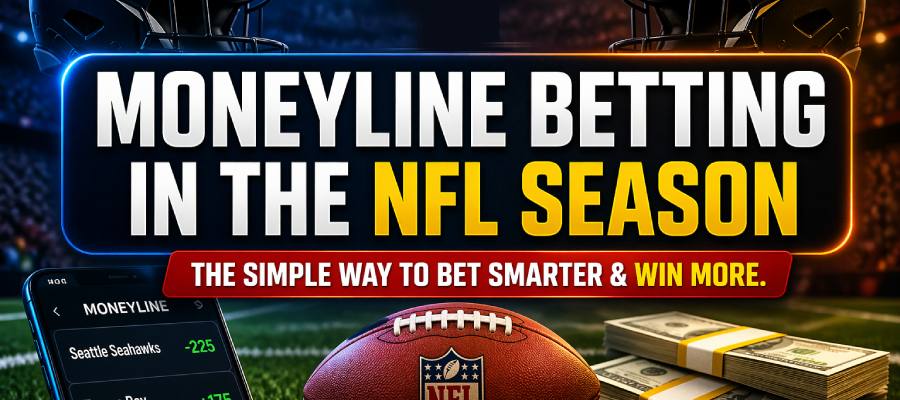
- Seattle Seahawks -225
- Tampa Bay Buccaneers +175
Favorite vs Underdog: Understanding the Risk-Reward Tradeoff
The team with a negative number is the favorite, while the team with a positive number is the underdog. The difference between the two reflects how likely the sportsbook believes each team is to win.
Quick Example
- 🔴 Seattle Seahawks -225: Risk $225 to win $100.
- 🟢 Tampa Bay Buccaneers +175: Risk $100 to win $175.
Potential Returns
| Bet | Risk | Profit | Total Return |
|---|---|---|---|
| Seattle -225 | $225 | $100 | $325 |
| Tampa Bay +175 | $100 | $175 | $275 |
What This Means for Bettors
- 💰 Favorites win more often but offer smaller returns.
- 🚀 Underdogs win less frequently but provide larger payouts.
- 📊 Higher potential profit always comes with higher risk.
- ⚖ Successful bettors focus on value rather than simply picking winners.
If you’re serious about building consistent returns from spots like this, bankroll strategy becomes critical, especially over a full season. Applying proven tips to help boost your NFL bankroll can make a big difference in how these wagers perform over time.
| Team | Moneyline | Example Bet | Potential Winnings | Total Return |
|---|---|---|---|---|
| Seattle Seahawks | -225 | $225 | $100 | $325 |
| Tampa Bay Buccaneers | +175 | $100 | $175 | $275 |
Visual Model
Where the Sportsbook Commission Comes From
So where’s the commission? It’s there, but it’s a little tougher to find. The commission comes when the bookmaker elevates the charge a little more for the favorite and pays back slightly less than he should if the underdog wins.
On one side, they’re charging too much, and they’re underpaying on the other, in order to keep their profit.
This is why disciplined wagering matters just as much as picking winners, since even small inefficiencies in pricing add up over time. Following structured tips for managing your bankroll helps you stay profitable despite the built-in edge.
Understanding why those pricing differences exist starts with knowing how oddsmakers build the opening market. Learning how sportsbooks set NFL odds provides additional context on how power ratings, injuries, betting action, and risk management all influence the moneyline prices you see each week.
Key Insight
% Built-in margin:
The sportsbook does not need a separate visible fee because the pricing already includes its edge.
🔍 Why it matters:
Two sportsbooks may list slightly different moneylines on the same NFL game, which is why line shopping can improve your long-term value.
Moneyline Payout Calculator
Enter your stake and moneyline odds to estimate your potential winnings and total return.
When Moneyline Betting Makes Sense
For a broader look at how these decisions fit into a full-season approach, review the ultimate NFL betting guide with advanced strategies and real-game application.
Why Many Bettors Prefer NFL Moneylines
- ✔ You do not need to worry about covering a point spread. If your team wins the game outright, your bet wins.
- ✔ Moneylines can simplify decisions when the spread feels too close to provide a clear betting edge.
- ✔ Underdog moneylines can generate larger returns when you correctly identify a potential upset.
How Moneylines Fit Into Long-Term NFL Betting
Many bettors view NFL moneylines as part of a broader betting portfolio rather than a standalone market. Weekly moneyline wagers create opportunities to capitalize on individual matchups, while season-long futures allow bettors to take positions on outcomes that may not be decided until months later.
Understanding what NFL futures bets are helps explain how outright winners, division champions, playoff qualification markets, and other long-term wagers differ from week-to-week betting. Equally important is understanding when to bet NFL futures and how timing impacts long-term betting value, since prices can move significantly throughout the offseason and regular season.
For bettors targeting the championship market, learning how early betting can lock in a Super Bowl line shows why securing a price before major roster news, injuries, or shifts in public expectations may preserve stronger long-term value.
Moneylines vs Futures at a Glance
| Market Type | Focus | Settlement Time |
|---|---|---|
| Weekly Moneylines | Who wins a specific game | After the game ends |
| NFL Futures | Season-long outcomes | Weeks or months later |
Why Many Bettors Use Both
- 📌 Weekly moneylines provide regular betting opportunities throughout the season.
- 📈 Futures can lock in value before odds shorten as teams outperform expectations.
- 💰 Combining both approaches can create multiple paths to profit across the NFL calendar.
- ⏱ Timing matters more in futures markets because prices can change dramatically before kickoff, playoff races, or key roster developments.
Finding Better Value on NFL Moneylines
NFL parity creates regular upset opportunities, so the best moneyline is not always on the team most likely to win. Value comes from comparing the price with how likely you believe each side is to win outright.
📊 Moneyline Value Check
| Market signal | What it can mean |
|---|---|
| Favorite has a steep price | You risk more for a smaller return, so the favorite may need a clear matchup edge. |
| Underdog is priced competitively | A closer-than-expected matchup can make the larger payout worth evaluating. |
| Line moves near kickoff | Public support or larger wagers may be influencing the available price. |
💡 Compare Related NFL Markets
- For a player-focused alternative to backing a team outright, explore NFL anytime touchdown scorer bets, which focus on whether a specific player reaches the end zone.
- Use NFL betting splits to compare ticket percentages with the amount of money wagered before deciding whether a moneyline move reflects public or larger-bettor activity.
- When the season reaches elimination games, review how to bet on NFL playoffs before reacting to fast-moving postseason moneylines.
💰 Practical Moneyline Habits
- Compare prices across sportsbooks whenever possible.
- Question favorites that appear overvalued relative to their matchup edge.
- Consider underdog moneylines when the game looks closer than the odds imply.
Why Sportsbook Selection Matters for NFL Betting
There is often some variance between sportsbooks when it comes to NFL moneylines, so shopping for the best available number can improve your long-term results. Bettors who want to improve that process can benefit from learning more about NFL line shopping strategies across sportsbooks, since even small pricing differences can have a meaningful impact over the course of a season. That becomes even more important once bettors move into live wagering. Learning how NFL live betting works can help explain how changing game conditions affect moneyline prices in real time, while understanding how to choose a sportsbook for live NFL betting can help explain why execution speed, pricing quality, and market responsiveness matter during fast-moving NFL games.
| Situation | Why Moneyline Helps |
|---|---|
| The point spread feels too close | You can remove the spread from the decision and focus only on who wins. |
| You see upset potential | Underdog moneylines can create stronger payouts when your read is correct. |
| You trust the favorite but dislike the spread | A favorite can win outright without covering the posted number. |
| Different books show different prices | Shopping for a better number can increase your return on the same pick. |
Compare Moneyline Picks With Broader NFL Betting Factors
Before locking in an NFL moneyline, compare the matchup, injuries, motivation, line movement, and market context using this guide to NFL critical betting factors.
View NFL OddsFAQ
What is NFL moneyline betting?
NFL moneyline betting is a wager on which team will win the game outright. Unlike point spread betting, the margin of victory does not matter—your team simply needs to win the game.
How do NFL moneyline odds work?
Negative odds identify the favorite, while positive odds identify the underdog. A -225 favorite requires a $225 wager to win $100, while a +175 underdog wins $175 on a successful $100 bet.
Is moneyline betting easier than point spread betting?
Many bettors find moneylines easier because there is no need to predict whether a team will cover a spread. The only question is which team will win the game outright.
When should you bet an NFL underdog moneyline?
Underdog moneylines can offer value when you believe the game is more competitive than the odds suggest. Because NFL parity creates frequent upsets, some bettors target underdogs when the market appears to overvalue the favorite.
What is the difference between a moneyline and an NFL futures bet?
A moneyline wager focuses on the outcome of a single game, while a futures bet focuses on a season-long outcome such as winning the Super Bowl, a division title, or making the playoffs. Futures markets may take weeks or months to settle.
Why do moneyline odds differ between sportsbooks?
Each sportsbook manages risk independently, which can lead to different prices on the same game. Comparing odds across sportsbooks can help bettors secure better value and improve long-term profitability.
How do sportsbooks make money on NFL moneylines?
Sportsbooks build their commission directly into the odds by slightly adjusting prices on both sides of the market. This built-in margin allows them to generate profit regardless of which team wins.
Are moneylines or point spreads better for NFL betting?
Neither market is universally better. Moneylines are often preferred when bettors have a strong opinion on the outright winner, while point spreads may provide more value when the expected margin of victory becomes the primary factor.
Summary
- NFL moneyline betting removes the point spread and focuses only on the team that wins the game.
- Negative odds identify the favorite, while positive odds identify the underdog.
- Favorites require more risk for smaller profit, while underdogs offer larger payouts because they carry more risk.
- The sportsbook commission is built into the price, so comparing moneylines matters.
- Moneyline wagering can be especially useful when a spread feels too close or an upset looks realistic.
NFL Weekly Betting Hub
Track weekly odds, betting tips, spreads, props, and sportsbook movement all season long.
Final Thoughts
Moneyline betting remains one of the most straightforward NFL wagering options because the objective is simple: pick the team that will win the game outright. For many bettors, that simplicity makes moneylines easier to evaluate than point spreads.
Key Advantages of NFL Moneyline Betting
- ✅ No need to calculate whether a team can cover a spread.
- ✅ Easier to evaluate when you have a strong opinion on the outright winner.
- ✅ Useful for targeting underdog value when the market may be overrating the favorite.
Understanding the Tradeoff
| Bet Type | Win Probability | Potential Return |
|---|---|---|
| Favorite Moneyline | Higher | Lower |
| Underdog Moneyline | Lower | Higher |
A favorite may be more likely to win, but the payout is typically smaller and requires a larger investment. An underdog may lose more often, but correctly identifying value can produce significantly larger returns.
Where Value Often Appears
Comparing the moneyline with the point spread can sometimes uncover pricing inefficiencies. This becomes particularly useful when favorites receive heavy public support and lines become inflated. Learning how to handle inflated point spreads can provide additional context when deciding which market offers the better opportunity.
- 🔍 Look for favorites that may be overpriced.
- 📈 Evaluate whether the underdog has a realistic path to winning outright.
- 💰 Compare moneyline prices across sportsbooks before placing a wager.
- 🎯 Focus on value rather than simply predicting winners.
The Bottom Line
The NFL’s competitive balance creates upset opportunities every week, which is why moneylines remain a popular option among experienced bettors. Whether you’re backing a favorite, targeting an underdog, or comparing markets for value, the most effective approach is to evaluate the matchup carefully, compare available prices, and remain disciplined throughout the season.
Small improvements in price may seem insignificant on a single bet, but over dozens of wagers across an NFL season, consistently securing better numbers can have a meaningful impact on long-term results.
MyBookie: Bet On Anything. Anywhere. Anytime.

About the Author

Since 2008, D.S. Williamson has written about sports and sports handicapping. His philosophy is value-based, meaning statistics and other handicapping factors are only useful when compared with the available wagering odds. He believes bankroll management and consistently making value-based wagers are the most important factors separating successful sports bettors from unsuccessful bettors.
Sportsbook Bonuses
Read requirements in the Bonus page. However, if you want to take a deep knowledge, go to MyBookie Bonus Rules and How to