English


Last updated: September 2026
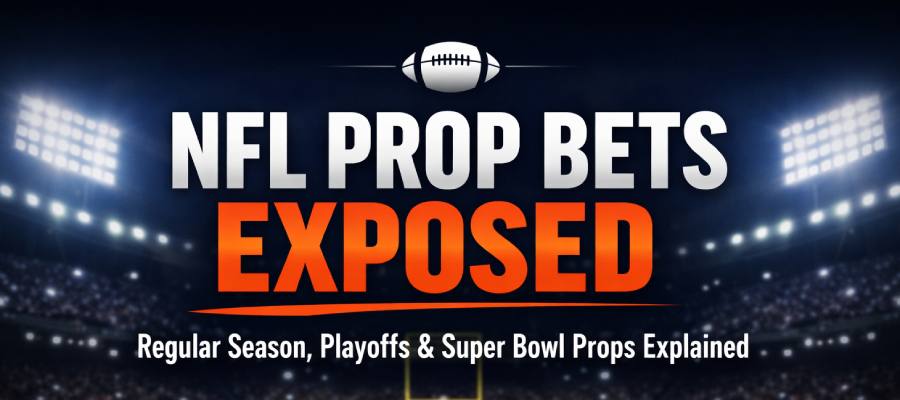
NFL prop bets are wagers on specific player or game outcomes rather than simply which team wins. Common examples include passing yards, rushing yards, receptions, touchdowns, completions, longest plays, and other player or game statistics.
These markets are available throughout the NFL season, including the regular season, playoffs, and Super Bowl. The types of props offered can vary by matchup and event, with major games often featuring a wider selection of player and game-specific markets.
Core takeaway: NFL prop betting is about evaluating a specific statistical outcome against the price and line offered by the sportsbook. The same basic process applies from the regular season through the playoffs and Super Bowl, but injuries, matchups, player roles, game conditions, and market pricing can all affect the available props.
Quick Answer: NFL Prop Bets Explained
NFL prop bets are wagers on specific player or game statistics, such as passing yards, rushing yards, receptions, or touchdowns. They are offered during the regular season, playoffs, and Super Bowl, although the available markets and prices can vary by matchup and event.
Table of Contents
- Betting Odds Explained: Quick Snapshot
- What Betting Odds Actually Represent
- Types of Betting Odds You’ll Encounter
- Reading a Sports Betting Line Without Guessing
- Why Sportsbook Odds Move
- Betting Tips That Actually Hold Up
- Implied Probability and Value Betting
- Common Mistakes Linked to Odds Misunderstanding
- How Odds Behave by Sport
- FAQ
- Final Thoughts
Betting Odds Explained: Quick Snapshot
Betting odds represent probability and risk, not predictions. They adjust based on money, exposure, timing, and market behavior.
Why bettors study odds:
• Identify mispriced lines • Avoid emotional betting • Compare sportsbook prices • Control bankroll risk • Find long-term value
Odds reward discipline, not confidence.
What Betting Odds Actually Represent
Betting odds exist to balance risk. They are posted so sportsbooks can manage liability, not to declare which side is correct.
Key Insight
📈 Concept:
Every sports betting line reflects probability as the market sees it at that moment.
Why it matters:
A team can look dominant and still be a poor wager if the price is inflated.
Types of Betting Odds You’ll Encounter
Sportsbooks display odds in different formats, but the meaning remains the same. Each format communicates the potential return relative to the amount wagered and can be converted into the same underlying probability.
Understanding how these formats work makes it easier to compare prices, calculate potential payouts, and recognize when two sportsbooks are offering different prices on the same market. American odds are especially common in U.S. sports betting, while decimal and fractional formats are widely used in other markets.
Odds Formats
💲 American Odds:
-110 means risking $110 to win $100. +150 means risking $100 to win $150.
Global Formats:
Decimal and fractional odds express the same probability in different ways.
| Format | Meaning |
|---|---|
| American (-110) | Risk $110 to win $100 |
| American (+150) | Win $150 on a $100 bet |
| Decimal (2.50) | Total return is 2.5x stake |
| Fractional (3/2) | Win $3 for every $2 risked |
Reading a Sports Betting Line Without Guessing
A betting line answers one question: what price is being offered right now?
Once you understand how the price works, the next step is knowing how those numbers appear when placing a wager. This guide to betting NFL online walks through the basic process of choosing a market, reviewing the odds, entering a stake, and confirming the wager.
Visual Model
Spreads, moneylines, and totals all serve the same purpose: expressing price. This is foundational for beginners and advanced bettors alike. For a football-specific walkthrough of American odds, payouts, implied probability, spreads, moneylines, and totals, see this guide on how to read NFL betting odds.
Why Sportsbook Odds Move
Odds move because sportsbooks adjust to pressure. A betting line is not static; it can change as new information enters the market, betting activity develops, or the sportsbook adjusts its exposure.
That means the number available when a market opens may look very different from the price available closer to the event. Understanding what drives those changes helps bettors focus on the movement of the price rather than simply assuming that a move means one side will win.
Market Drivers
- Betting volume
- Sharp action
- Injuries and news
- Timing and exposure
Several factors can influence how quickly or significantly a line changes:
- New information: Injuries, lineup changes, weather, and other developments can alter market expectations.
- Betting activity: Significant action can prompt sportsbooks to reassess the price or spread.
- Market timing: Prices can behave differently when a game is first posted compared with the hours leading up to kickoff.
- Risk management: Sportsbooks may adjust prices as they manage their overall exposure on a market.
Opening Lines, Closing Lines, and Market Movement
Opening lines test demand. Closing lines reflect where the market settles. The difference between those prices can provide useful information about how much the market changed between the opening number and the event itself.
These pricing shifts become even more noticeable during the NFL offseason, when roster moves, coaching changes, and futures speculation can create rapid adjustments across betting markets. Bettors looking to better understand those timing windows and market reactions should review these NFL offseason wagering tips, which break down how odds behavior changes before the regular season begins.
Betting Tips That Actually Hold Up
Most proven betting tips are simple and repeatable. The goal is not to find a secret formula or predict every result, but to make decisions using consistent principles that account for price, probability, and risk.
Good betting habits also help separate the quality of a wager from its short-term outcome. Comparing available prices, managing stake size, and avoiding emotional decisions can create a more consistent framework for evaluating bets over time.
📊 Strategy:
Compare prices across sportsbooks.
💰 Discipline:
Use consistent wager sizing and avoid emotional bets.
Build a More Consistent Betting Process
For bettors who want to build a stronger foundation around odds, markets, bankroll management, and betting terminology, the Betting Academy provides additional educational resources.
For a deeper breakdown of market behavior and decision factors, review this NFL critical betting factors guide, which shows how pricing reacts to real-world variables.
Because even small pricing differences can affect long-term performance, many experienced bettors also follow an NFL line shopping strategy across sportsbooks to compare odds and identify better numbers before placing their wagers.
Implied Probability and Value Betting
Every betting line implies a percentage chance of success. That percentage gives bettors a way to translate the posted price into a probability and compare the market’s expectation with their own assessment.
The important distinction is that implied probability is based on the odds being offered, while a bettor’s estimated probability is an independent assessment. Comparing the two helps explain why the same team or player can look attractive at one price but unattractive at another.
Implied Probability Calculator
Convert American odds into implied probability.
Applying Probability to Player Props
If your estimated probability is higher than implied probability, the bet has value.
This principle also applies to player props. Understanding how NFL anytime touchdown scorer bets convert scoring probability into a market price can help bettors determine whether a player’s role and red-zone opportunities justify the odds.
Common Mistakes Linked to Odds Misunderstanding
Many betting mistakes happen quietly. They often start with misunderstanding what the odds actually represent or focusing too heavily on whether a single wager wins or loses.
Ignoring the price, chasing losses, or assuming a strong team automatically creates a strong bet can all lead to poor decisions. Recognizing these patterns makes it easier to evaluate wagers based on probability, price, and risk rather than emotion or short-term results.
| Mistake | Impact |
|---|---|
| Chasing losses | Increases variance and risk |
| Ignoring juice | Reduces long-term profitability |
| Overusing parlays | Compounds bookmaker edge |
Focus on Price, Not Just Results
These mistakes often come from focusing on whether a bet wins rather than evaluating the price attached to it. A wager can lose even when the underlying analysis was reasonable, while a winning bet does not automatically mean the price was favorable. Separating the quality of the decision from the short-term result helps keep odds, probability, and bankroll risk in proper perspective.
Understanding the price is only part of evaluating a wager. Bettors should also review the applicable sports betting rules so they understand how markets are graded, settled, and handled under the posted terms.
How Odds Behave by Sport
Different sports produce different betting environments. Bettors looking to build a broader understanding of NFL betting markets should recognize how pricing behavior, key numbers, public betting pressure, and line movement differ from other sports throughout the season.
Within NFL markets, team totals narrow that pricing analysis to one offense instead of the combined score. This NFL team totals betting guide explains how sportsbooks price those lines and which matchup factors can influence the number.
- NFL: Efficient markets with key number sensitivity
- NBA: Strong reaction to rotations and rest
- MLB: Pitching-driven pricing
- NHL: Tight lines due to low scoring
FAQ
What do betting odds mean?
They show implied probability and risk.
How do I read a sports betting line?
Focus on price, probability, and key numbers.
Why do sportsbook odds change?
Because betting action and new information reshape the market.
How do I know if odds offer value?
When implied probability is lower than your own estimate.
NFL Weekly Betting Hub
Track weekly odds, betting tips, spreads, props, and sportsbook movement all season long.
Summary
- Odds represent probability, not predictions
- Value comes from price misalignment
- Discipline beats intuition long-term
Start Reading Odds Like a Pro
Compare prices and apply disciplined betting strategies with real-time markets: sports betting lines
Browse SportsbookFinal Thoughts
Sustainable betting isn’t built on picking winners. It’s built on understanding how prices work and how markets respond.
Bettors who consistently win over time are not the ones who guess correctly the most—they are the ones who recognize when the price is wrong. That distinction changes everything.
Once you stop treating odds as opinions and start treating them as market signals, decision-making becomes clearer, calmer, and more repeatable. This shift reduces emotional betting and increases long-term consistency.
In the end, betting success is less about being right and more about being priced right. Mastering odds is not optional—it’s the edge.
MyBookie: Bet On Anything. Anywhere. Anytime.
Important: Sports betting involves risk. No strategy guarantees results, and managing exposure is essential.

About the Author

Henry Watkins is a Sports Writer at MyBookie. Originally from Scotland and currently residing in Metro Atlanta with his wife, Penny, Henry covers competitive and professional sports as well as the business of sports. In addition to his sports writing, he is an author of horror fiction, including Karaoke Night, Crueller, and Off The Grid.
Sportsbook Bonuses
Read requirements in the Bonus page. However, if you want to take a deep knowledge, go to MyBookie Bonus Rules and How to


🔍 Explore Everything you Need to Know aboout your Licensed, Trusted Home For Casino and Sports Since 2014
👉 Gamble responsibly—must be 21+ and in a Legal Jurisdiction | Get Help at 1-800-Gambler