English


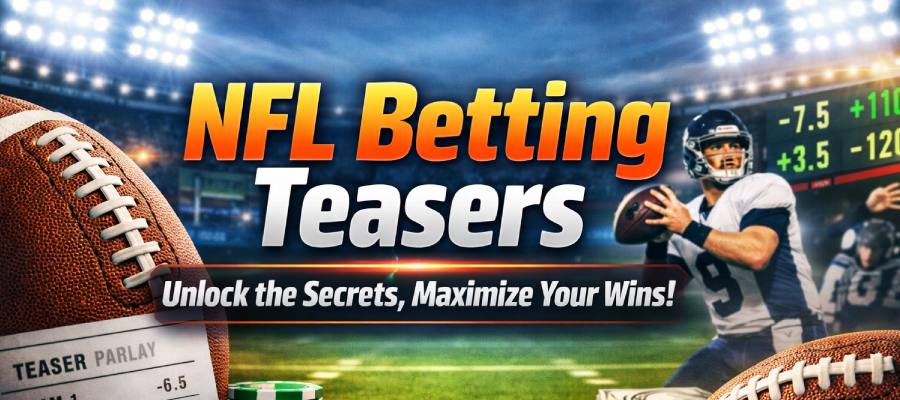
Understanding NFL Betting Teasers: NFL teasers let bettors shift point spreads or totals into more favorable ranges — but only sharp bettors know when they’re profitable and when they’re a trap. If you’ve ever looked at the NFL point spread for tomorrow and wished you could adjust it, teasers allow exactly that — when applied with discipline.
This is a complete, must-bookmark guide explaining NFL teaser betting from fundamentals to advanced strategy, including how to identify value, avoid common traps, and apply proven frameworks like Wong teasers.
Since NFL games frequently land on key numbers, understanding them is critical—learn more in this key numbers breakdown.
Core takeaway: NFL teasers can create a real edge only when they cross key numbers, are priced correctly, and are used selectively—not as a shortcut to “safer” bets.
Editorial Note
This guide explains how NFL teaser betting works, how key numbers affect teaser value, and why pricing, line movement, and timing matter. It is intended for educational purposes and does not guarantee betting outcomes.
Quick Answer
An NFL teaser allows bettors to adjust point spreads or totals—usually by 6 to 7 points—in exchange for reduced payouts and multiple winning selections. Teasers are most effective when they cross key NFL numbers such as 3 and 7 and are used with disciplined bankroll and line-shopping strategies.
📈 Concept:
Teasers adjust spreads or totals (usually by 6–7 points) and combine multiple legs into one bet.
💡 Why it matters:
They reduce variance and allow you to cross key numbers like 3 and 7—critical for long-term profitability.
⚙ Best Angles:
Cross 3 and 7, target low totals, apply Wong teaser rules, avoid teasing through zero, and compare odds.
💰 Key Action:
Always shop lines and verify teaser pricing before placing bets to maintain positive expected value.
Compare adjusted lines and pricing directly in the NFL Odds section before building your teaser.
View NFL Teaser OddsTeasers move the spread or total in your favor — typically by 6, 6.5, or 7 points — and require multiple legs to cash. You’re essentially buying points in a packaged multi-leg parlay.
If the Cowboys are -7, a 6-point teaser adjusts the line to Cowboys -1.
While the sports betting line format varies between sportsbooks, the structure is consistent: adjusted odds, multiple legs, and softer spreads.
Push Rules Simplified
🔄 Multi-leg teaser:
If one leg pushes, the teaser drops one leg and recalculates odds.
↻ Two-leg teaser:
If one leg pushes, the entire bet usually results in a push.
| Element | Meaning |
|---|---|
| Point Adjustment | Usually 6–7 points added to spread or total |
| Leg Requirement | Multiple selections required to win |
| Payout | Reduced compared to parlays |
| Edge Source | Crossing key numbers like 3 and 7 |
Although teasers are often marketed as a safer way to bet on football, experienced bettors know that their value depends on much more than simply adding extra points. Understanding when teasers improve your odds—and when sportsbooks have already priced that advantage into the market—is what separates sharp bettors from casual players.
Pros vs Cons
✅ Pros:
Reduces variance, crosses key numbers, protects against late swings, and creates more favorable spreads in low-scoring games.
❌ Cons:
Lower payouts, all legs must win, and even small pricing mistakes can eliminate long-term value.
Many experienced NFL bettors use teasers because football scoring is not evenly distributed. Games frequently finish on margins such as 3, 6, 7, and 10 points, which means moving a spread through those key numbers can significantly improve a wager’s probability of winning.
For example, moving an underdog from +2 to +8 captures both 3 and 7, two of the most common final margins in NFL games. That extra cushion may seem small, but over hundreds of bets, crossing those numbers can have a measurable impact on long-term profitability.
| Advantage | Benefit |
|---|---|
| Crossing key numbers | Improves the mathematical value of certain spreads. |
| Lower variance | Helps reduce the impact of narrow losses. |
| More flexible lines | Allows bettors to create more favorable betting positions. |
| Protection against volatility | Provides extra room for unexpected game swings. |
However, teasers are not automatically profitable simply because the adjusted spread looks safer. Sportsbooks account for those extra points by reducing payouts and increasing the probability needed to break even. A teaser with poor pricing can be less valuable than a standard point-spread wager.
The key is implied probability. Teasers only work when the increase in win probability outweighs the cost of the wager. Sharp bettors evaluate teaser opportunities by comparing prices, projected scoring environments, injury reports, and whether the teaser crosses the NFL’s most important numbers.
If you want to better understand how concepts like implied probability, pricing, and betting markets are defined in football wagering, reviewing a complete NFL betting glossary can help reinforce these fundamentals.
Not all NFL teasers work the same way. Different point adjustments change both the payout and the mathematical value of the bet, which is why experienced bettors pay close attention to how many points they are buying and whether those extra points cross key NFL numbers.
📊 6-Point Teaser:
The most popular option because it offers the best balance between cost, flexibility, and the ability to cross key numbers.
📈 6.5–7 Point Teaser:
Provides additional protection, but sportsbooks charge more for the extra half-point or point.
🏆 Wong Teaser:
Moves favorites and underdogs through both 3 and 7, creating the strongest historical edge.
| Teaser Type | Typical Adjustment | Best Use Case |
|---|---|---|
| Standard teaser | 6 points | Crossing key numbers while maintaining reasonable payouts. |
| Extended teaser | 6.5–7 points | Bettors seeking more margin at the cost of lower value. |
| Wong teaser | 6 points | Favorites of -7.5 to -8.5 and underdogs of +1.5 to +2.5. |
For example, moving the Steelers from +2 to +8 crosses both 3 and 7, turning the wager into a classic teaser leg. By contrast, moving a team from +10 to +16 adds points that are historically less important, which is why sharp bettors prioritize the numbers being crossed rather than the number of points gained.
Teasers are not equally effective in every matchup. Their value tends to increase in games where scoring is expected to be lower and outcomes are more predictable, since every extra point carries greater importance. Sharp bettors often look for specific conditions that maximize the impact of moving a spread through key numbers.
🏡 Home favorites:
Teams favored by 7.5 to 8.5 points often create attractive teaser opportunities.
🌡 Low-scoring games:
Totals around 40–41 points increase the value of every point gained.
🛡 Elite defenses:
Strong defensive teams tend to produce tighter, more predictable outcomes.
🌬 Weather impact:
Wind, rain, and snow can suppress scoring and improve teaser efficiency.
- Home favorites of 7.5–8.5 points.
- Games with totals around 40–41 points.
- Elite defensive teams.
- Bad-weather matchups.
- Offenses missing key players because of injuries.
| Situation | Why It Matters |
|---|---|
| Low totals | Each point added by the teaser becomes more valuable. |
| Defensive games | Smaller margins make crossing key numbers more impactful. |
| Weather concerns | Reduced scoring can favor teaser strategies. |
| Injured offenses | Limited scoring potential increases the importance of extra points. |
Totals teasers can also create opportunities, although they are generally less popular than spread teasers. For example, an Over 45 can move down to 38, while an Under 52 can move up to 59. Because NFL scoring tends to cluster around specific margins, most professional bettors still prefer teasers that adjust point spreads rather than game totals.
Bettors comparing full-game totals with offense-specific markets should also review this NFL team totals betting guide to understand how wagering on one team’s scoring output differs from teasing the combined game total.
Quickly simulate how a teaser changes a spread.
Avoid These Errors
⛔ Teasing through zero:
Wastes value on irrelevant ranges.
⚠ High totals:
High-scoring games reduce teaser efficiency.
🚫 Forcing legs:
Never add picks just to complete a teaser.
Expand Your NFL Betting Edge
Advanced Concepts
Successful NFL teaser betting depends on much more than simply moving the spread. Understanding expected value, line movement, and sportsbook pricing helps bettors identify which teaser opportunities offer real value and which ones only appear safer on the surface.
📈 Expected Value and Pricing Efficiency
Expected Value (EV): If you don’t cross key numbers or get good pricing, EV collapses.
| Concept | Why It Matters |
|---|---|
| Crossing key numbers | Captures the highest-value ranges around 3 and 7. |
| Proper pricing | Determines whether a teaser creates positive EV. |
| Market understanding | Helps bettors recognize inefficient lines. |
- ✅ Learn how spreads and derivative markets work with NFL point spread handicapping strategies and betting concepts.
- 🎯 Understand how sportsbooks price individual markets by studying when NFL player props offer real betting value.
- 🔍 Evaluate injuries, weather, and other situational factors with the NFL Critical Betting Factors Guide.
A move from -6.5 to -7.5 can remove teaser value instantly by changing whether a bet crosses the NFL’s most important scoring margins.
Line Shopping Impact
💵 Better Pricing
Even half a point can improve long-term returns.
📉 Key Numbers
Crossing 3 and 7 is often the difference between value and no value.
🔍 Market Comparison
Different sportsbooks may offer significantly different teaser opportunities.
Because even a half-point move can dramatically change teaser value, experienced bettors often prioritize comparing NFL odds across sportsbooks before locking in teaser legs. Finding the best available number becomes even more important when trying to cross key margins like 3 and 7.
⚖ Execution and Long-Term Discipline
Execution: Combine sharp insights, timing, and disciplined selection.
Teaser betting also becomes more effective when it is part of a broader season-long approach rather than an isolated strategy. Bettors who understand scheduling dynamics, line movement, and weekly market trends often benefit from learning how to bet NFL regular season games before building teaser cards throughout the year.
- ⏰ Monitor line movement throughout the week.
- 💡 Select teaser legs that cross key numbers.
- 💰 Compare pricing before placing bets.
- 🏆 Build a complete strategy with this NFL betting guide.
FAQ
Yes—but only when used with discipline, correct pricing, and key-number awareness.
A teaser strategy that crosses key numbers 3 and 7 for maximum value.
Only after understanding spreads, odds, and implied probability.
NFL Weekly Betting Hub
Track weekly odds, betting tips, spreads, props, and sportsbook movement all season long.
Summary
- Teasers shift spreads but require precision
- Crossing 3 and 7 is essential
- Line shopping determines long-term success
- Discipline separates sharp bettors from casual ones
Analyze lines, compare pricing, and apply strategy using the latest NFL betting odds.
Browse NFL OddsFinal Thoughts
NFL teasers can be one of the sharpest betting tools when used correctly. They soften spreads, cross key numbers, and exploit inefficiencies—but only when applied with discipline and precision.
The difference between winning and losing with teasers is not the tool itself—it’s execution. Bettors who consistently compare bookie NFL odds, track line movement, and only play mathematically sound legs gain a measurable long-term edge.
Used incorrectly, teasers become a trap that disguises poor bets as “safer” plays. Used correctly, they become a strategic weapon that aligns probability with price.
The edge is real—but only if you earn it.
MyBookie: Bet On Anything. Anywhere. Anytime.

About the Author

Henry Watkins is a Sports Writer at MyBookie. Originally from Scotland and currently residing in Metro Atlanta with his wife Penny, Henry covers a range of topics, including competitive and professional sports as well as sports business. In addition to his sports writing, he is also an author of horror fiction, with works such as Karaoke Night, Crueller, and Off The Grid.
Sportsbook Bonuses